Pipeline 5.8

Cloud Storage Module


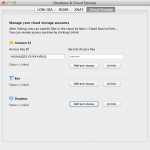
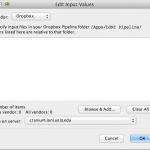
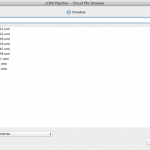
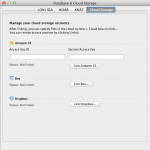
You can specify your data in the cloud as input and output to any Pipeline workflows. Currently supported cloud storage vendors are Amazon S3, Box and Dropbox. To start, link your cloud account to the LONI Pipeline under Tools > Database & Cloud Storage > Cloud Storage tab. For more information, please refer to the user guide.

NDAR Support


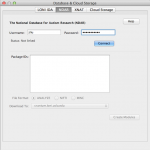
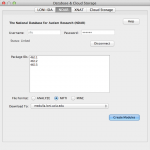
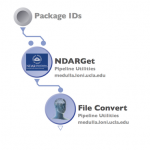
The Pipeline supports integration from the National Database for Autism Research (NDAR) database. For more information, please refer to the user guide.

Server Library Testing

Server library testing instructions are available under server terminals. It provides commands to launch CLI to validate and execute workflows in server library.

Multiple Clients

Now you can have multiple clients (GUI and CLI) connect to the same session (with the same credential).

Session Sharing

This version includes workflow session sharing (read only) feature for guests. It’s a server preference, and requires server admin to specify sharing username. Once enabled, guests can see all workflows by this user, but cannot modify (stop/pause/restart) them.

Web Service Module


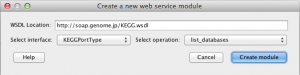
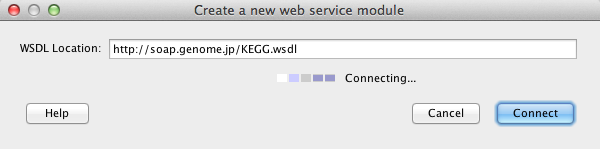
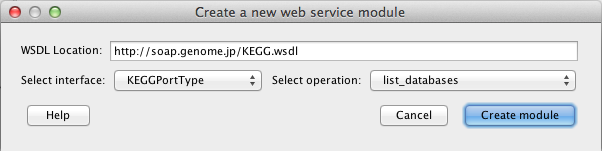
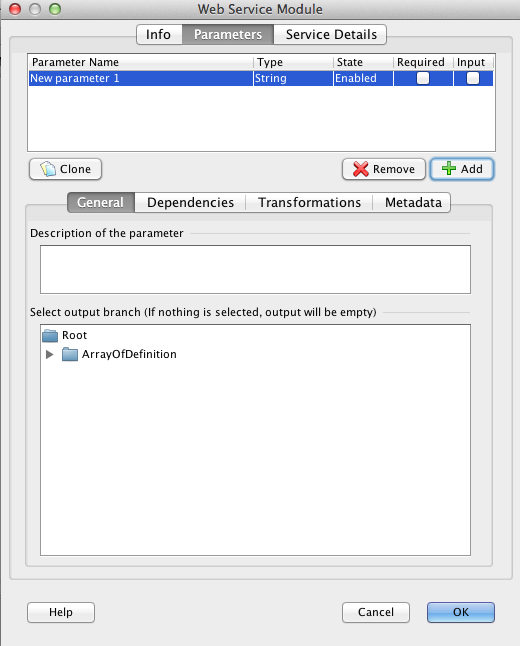
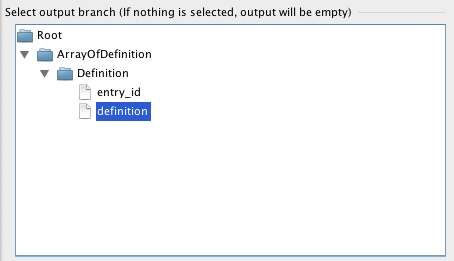
User can now use web services in the workflow by creating Web Service module. SOAP (Simple Object Access Protocol) based web services are supported, all you have to do is to provide WSDL file for the web service, and the Pipeline will parse and generated appropriate web service module. For more information, check our User Guide – Web Service Module.

Workflow Comparison Utility

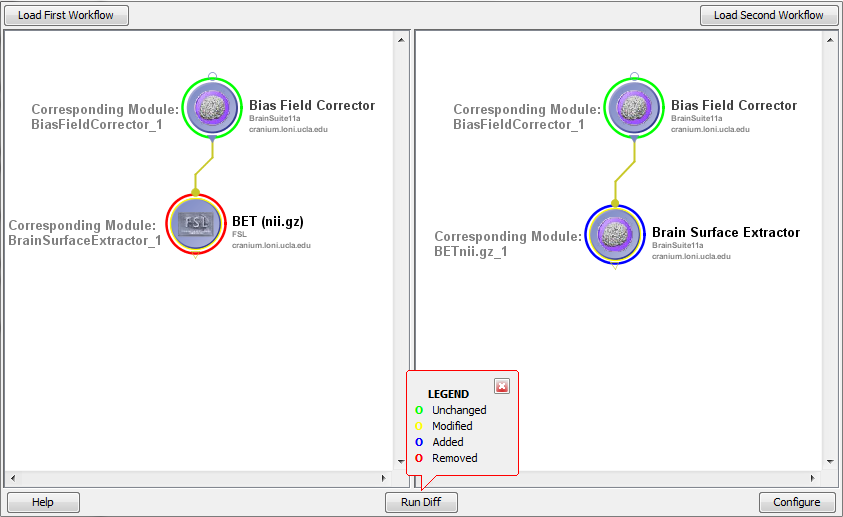
 The Workflow Comparison (diff) Utility can compare workflows within the Pipeline interface and show the differences. In order to launch this component, look for the Diff Workflows item under the Tools menu. For more information, check our User Guide – Workflow Diff Utility.

Data Extraction


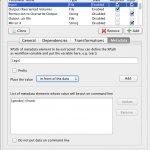
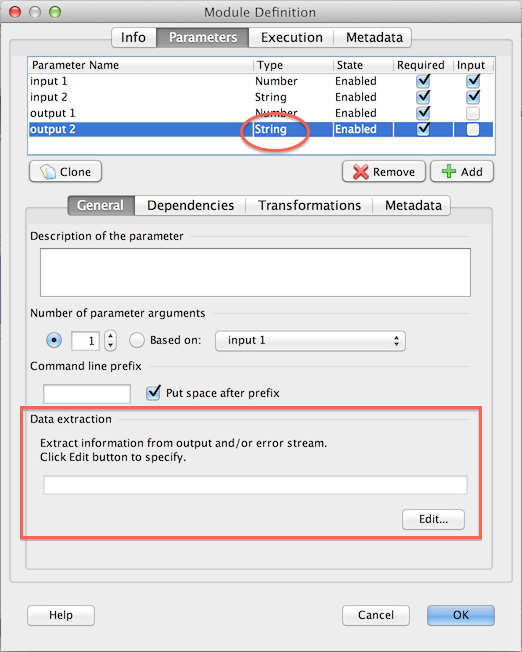
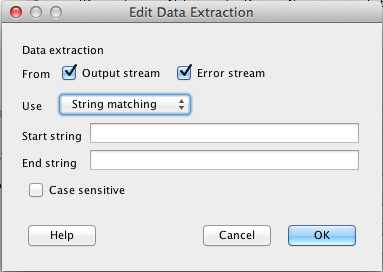
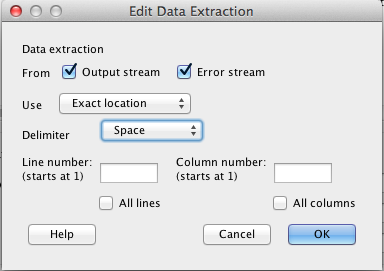
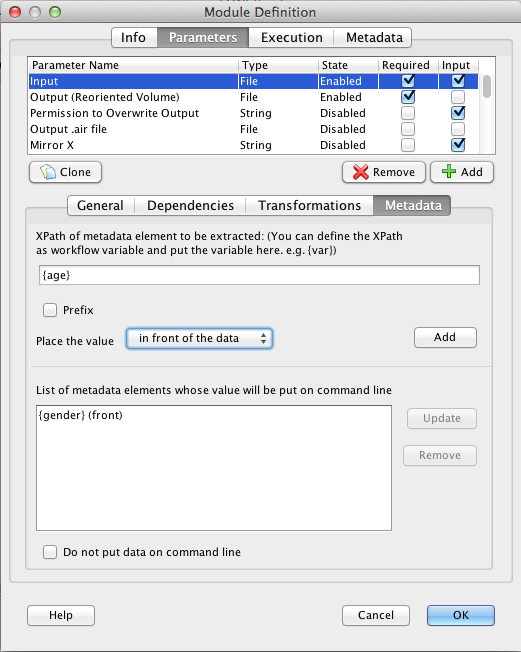
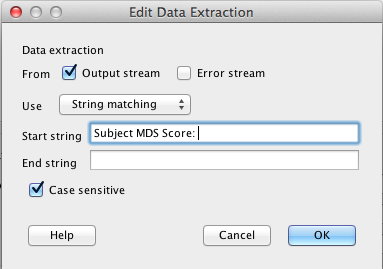
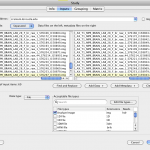
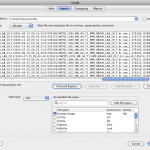
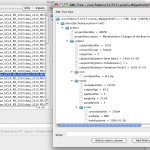
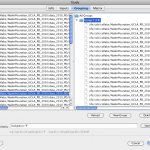
 Metadata from Study modules can be read and written by any execution modules. Data Extraction enables extract (read) contents from the metadata and feed contents to the executable/module. Any value from the metadata can be pulled and put along with input or output parameter under the command line. For more information, check our User Guide – Data extraction.

Metadata Augmentation


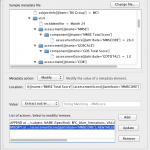
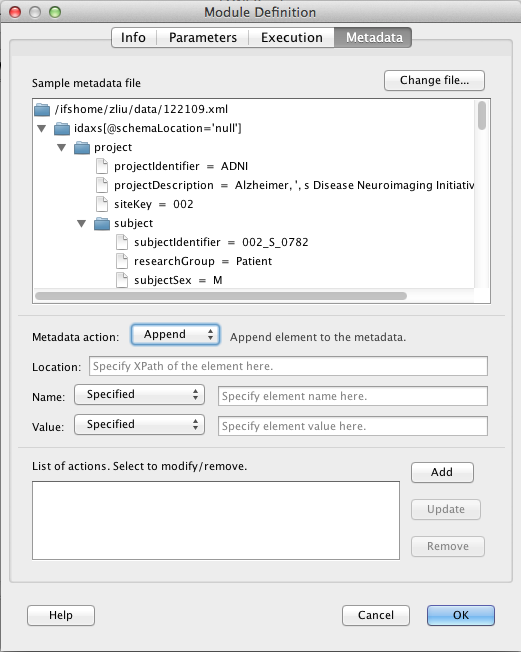
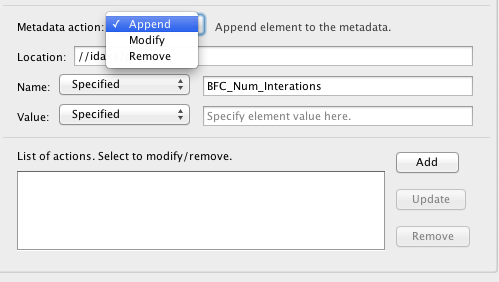
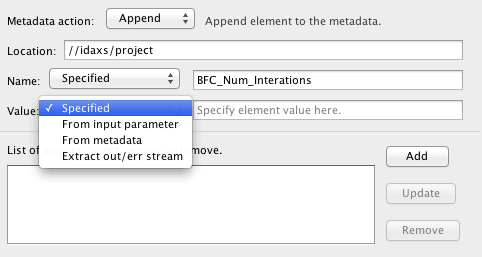
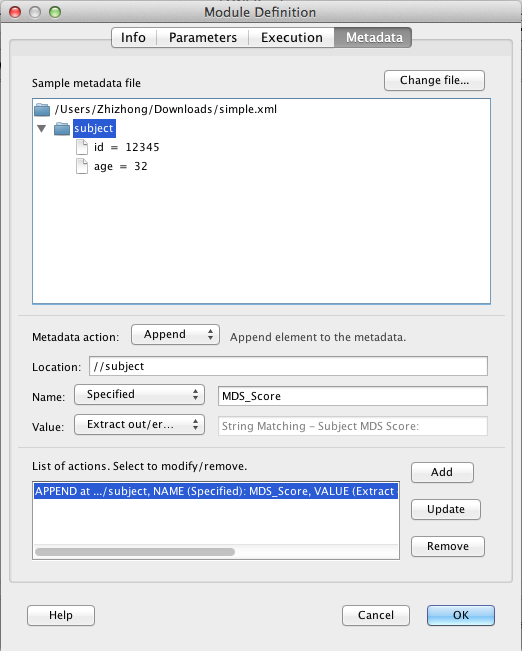
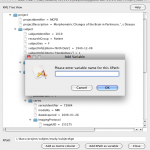
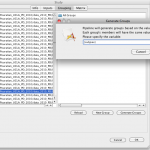
Metadata from Study modules can be read and written by any execution modules. Metadata Augmentation allows the modification (write) of metadata with contents generated from the underlining executable. You can add, modify or remove elements from the metadata file, with values from input parameters, or output stream and error stream of the executable. For more information, check our User Guide – Metadata Augmentation.

Previewer

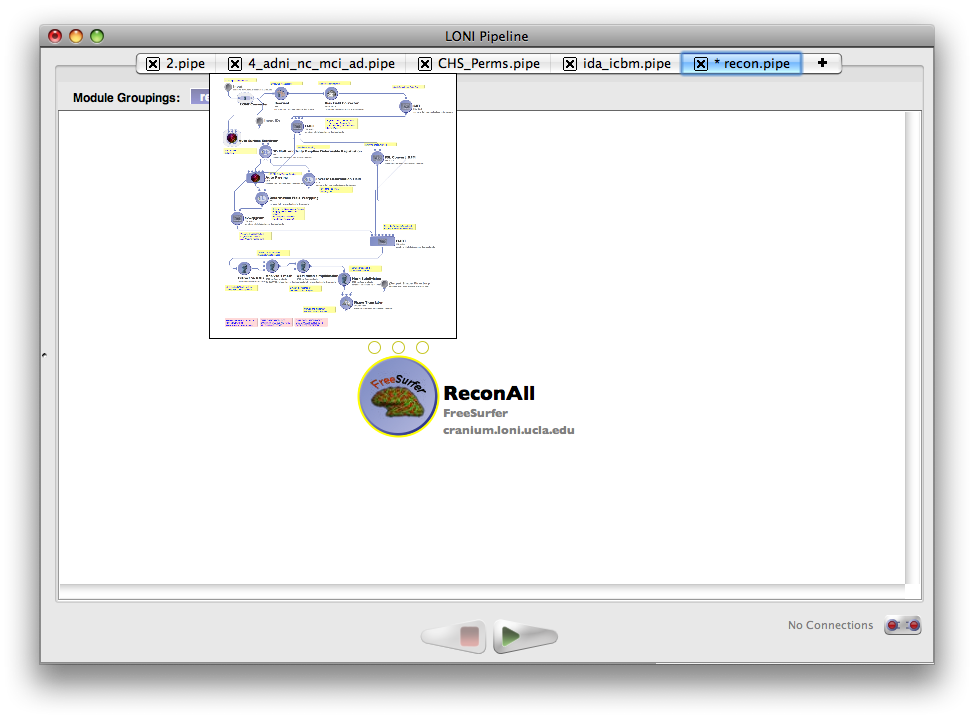
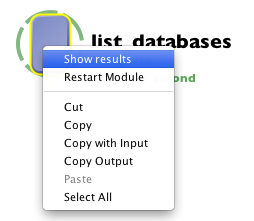
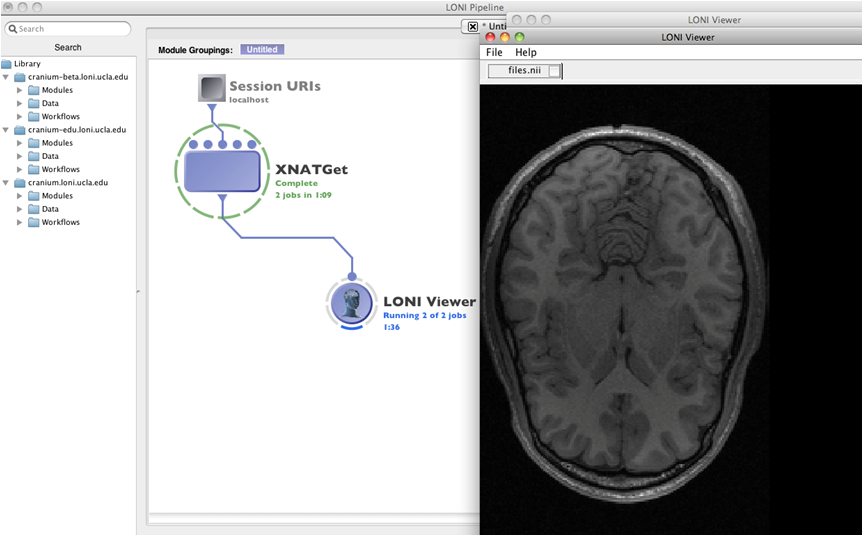
You can preview the image output files of your completed workflows. You can preview the outputs in two ways, hoover over the mouse pointer at the output parameter node on the workflow canvas, or hoover over the mouse at output files panel of the module. If you have multiple instances, by pointing mouse at output parameter node on the canvas, the previewer will let you scroll through all of the instances. Commonly used image file formats (e.g. .img, .nii, .mnc) are supported.

Copy Output

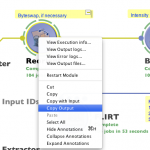
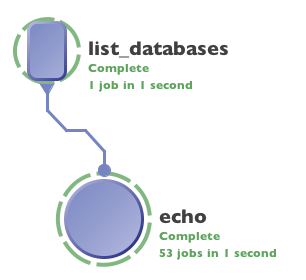
Copy output is a handy feature that allows you copy any completed modules’ outputs. When you paste, each output parameter will be converted as data source, with all the output files listed. If there are multiple output parameters for that module, multiple data sources will be created with their corresponding files. This feature is helpful when you want to take already completed output files from one workflow to a new workflow.

Cancel Instance

 
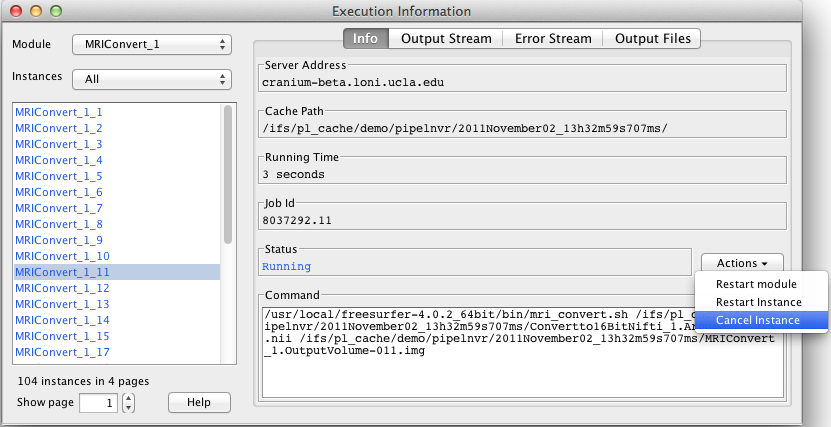
 Pipeline 5.3 allows user to cancel any pending instance of a module. All the related instances of the subsequent modules will be canceled as well.

Custom Grid and Environment Variables

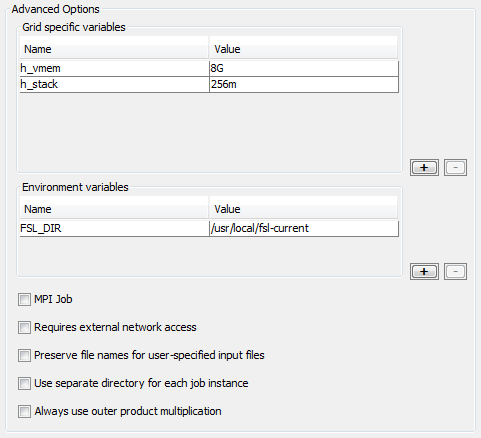
Server administrators can now control Pipeline’s grid engine variable usage and set restrictions to them and their values. This also allows arbitrary variable names and values. In addition, user can now define environment variables for any module. For more information, check our Server Guide – Grid Variables Policy.

For detailed change logs, please check the release notes.

keywords: change log, release note
  1. Editing Preferences.xml
  2. Server Configuration Tool
    1. General
      1. Hostname and port
      2. Temporary directory
      3. Scratch directory
      4. Log file location
      5. Use privilege escalation and Enable guests
      6. Persistence
      7. Days to persist session status
      8. History directory
      9. Crawler persistence URL
      10. Server library
    2. Grid
      1. Grid engine native specification
      2. Job name prefix
      3. Grid complex resource attributes
      4. Grid Variables Policy
      5. Max number of parallel submission threads
      6. Max number of resubmissions for “error stated” jobs
      7. Grid total slots
      8. Array jobs
      9. Grid plugin
      10. Finished job retrieval method
      11. Pipeline user is a grid engine admin
      12. Grid job accounting
    3. Access
      1. Server admins
      2. Directory access control
      3. User management
      4. Non-user-based Job management
      5. Workflow management
    4. Mappings
      1. Packages
      2. Executables
      3. Utilities
    5. Advanced
      1. Failover
      2. Log email
      3. Network
      4. Maximum number of threads for active jobs
      5. HTTP query server
      6. Automatically clean up old files
      7. Maximum number of metadata threads
      8. Warn when free disk space is low
      9. Server status
      10. Directory source recursive timeout
      11. External network access queue
      12. Validation warning
      13. NFS directories for validation
      14. Check and verify output files
      15. Test server library

You can customize your Pipeline server in two ways. Either by editing preferences.xml file, or using the Server Configuration Tool.

3.1 Editing Preferences.xml

You can find out the XML tags for a particular preference, or read the old version of server guide, here: Server Preferences Configuration.

3.2 Server Configuration Tool

This tool is included in the Pipeline distribution and can be opened by typing:

$ java -classpath Pipeline.jar server.config.Main

The Server Configuration Tool will open with default values. If you already have a Pipeline server preferences file, you can load it up by pressing the Load button on lower right.

You can view and make changes in any of the fields (to be explained in details below). After you are done, just click Save button on lower right corner. It will first validate your inputs and then save it to a file. If you already have a preferences file loaded, it will be overwritten, otherwise, it will ask where you want to save this newly created preferences file. At any time, you can restore to default values by clicking Restore button on lower right corner. After restore, all the changes after the last save will be discarded.

When you are done configuring preferences, you can start the Pipeline server with saved preferences file by

$ java -classpath Pipeline.jar server.Main -preferences preferences.xml

3.2.2.1 General
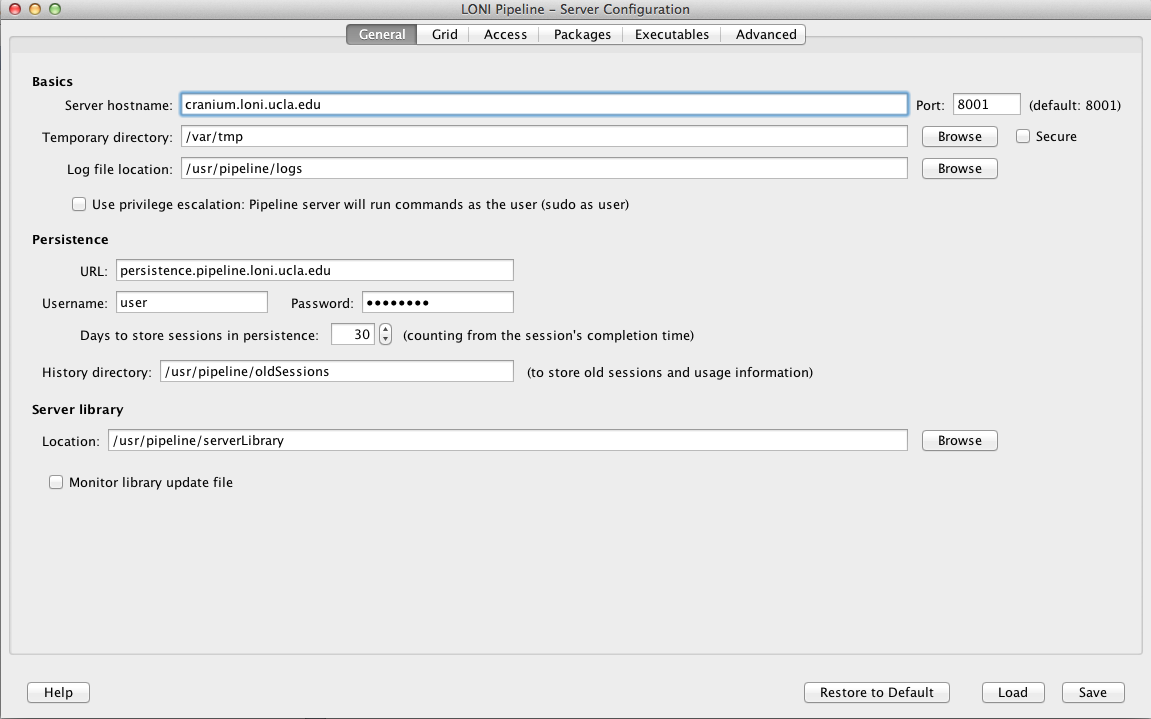
Interface Overview
The General tab lets you specify the most basic information needed for the Pipeline server.

3.2.1.1 Hostname and port

The server hostname is the hostname of the computer that you want the server to run on. It requires the fully qualified domain name of the computer that it is on.

The default port number is 8001. If you are using default port, you can leave the field blank. You can identify the server by just using the server hostname. If you use a non-default port, you have to identify the server by hostname:port format.

3.2.1.2 Temporary directory

The temporary directory is where all intermediate files for all the executed programs are stored on the server. This directory should be accessible from the Pipeline server as well as compute nodes. The Pipeline server will create a structure under there, and the compute nodes will read from and write to that directory. For example if you specify /ifs/tmp, the Pipeline server will create a directory /ifs/tmp/username/timestamp and put all the working files there.

Where username is the user that is running the server and timestamp is the time at which each workflow gets translated before execution. Inside each of those ‘timestamp’ folders will be all the intermediate files produced by executables from submitted workflows. Depending on the number of users using your server and the kind of work they do, this directory can balloon up very quickly.

If you check the Secure checkbox, the Pipeline server will store the temporary directory more securely.  Each workflow’s directory will be accessible only for the user who started the workflow.

It is suggested to specify a non-existing directory as temporary directory if you start your Pipeline server for the first time. The Pipeline server will create appropriate files at start up.

3.2.1.3 Scratch directory

The scratch directory is utilized in workflows to make data sink paths portable across Pipeline environments. In particular, this field is linked to the {$tempdir} special variable available to all Pipeline workflows. The server administrator should configure this to be the path to a directory to which all Pipeline users can write. If the grid is utilizing NFS, this directory must be available to all the compute nodes that the Pipeline server manages. When configured, this value is stored in the Pipeline user’s home directory, inside the userdata.xml file. Upon connecting to the Pipeline server, the client requests this value and stores it in the local userdata.xml file. Any references to the {$tempdir} variable in workflows are replaced with the configured value.

3.2.1.4 Log file location

If you want to explicitly set the directory location that your log files will write to, you can specify the path here. In order to define the prefix in which the log files will be named, simply add that to the end of the directory path. The unique number denoting the log file will be appended onto the file name. For example, if we specify log file location as  /nethome/users/pipelnv4/server/events.log, then log files will be created in the /nethome/users/pipelnv4/server/ directory, and will be named events.log.0, events.log.1, and so forth.
Note : The directory of log files MUST EXIST, before starting the server.

3.2.1.5 Use privilege escalation

When you have different users connecting to your Pipeline server, you might want to enforce different access restrictions on each user. If you’re running your Pipeline server on a Linux/Unix based system (including OS X), you can enable privilege escalation which will make the Pipeline server issue commands as the user who submits a workflow for execution. For example, if user ‘jdoe’ connects to a Pipeline server with privilege escalation enabled, any command that is issued on behalf of that user will be prefixed with ‘sudo -u jdoe ‘. This way all the files that are accessed and written by the user on the Pipeline server will be done on behalf of ‘jdoe’.

Remember, there is no harm in not enabling privilege escalation on your Pipeline server. All files will simply be created and read as the Pipeline server user. You will be giving uniform access to your system to all users. Additionally, it makes it easy to lock down the access of all Pipeline users because you only have to lock down the access of one actual user on your system; the Pipeline user.

In order to enable this feature in the Pipeline, you need to do two things. 1) modify your system’s sudoers file to allow the user that runs the Pipeline server to sudo as any user that will be allowed to connect to the system and 2) check “Use privilege escalation” under server configuration tool.

Enable guests option lets you grant guest log in to the server. The guest username is randomly generated by the client with the format “guest-[random 8-character string]”. If enabled, the guest will be able to connect to the server, submit workflow as Mapped guest user, and retrieve workflows by this guest. Regular users will not be affected in any way, and each guest will not have access to other guests’ workflow either. Pipeline Web Start and Workflow Library Navigator are set up with guests enabled.

3.2.1.6 Persistence

Pipeline server uses hsqldb to store information, including workflow status and module status. By default, it is stored in Pipeline server’s memory, and will be removed when the Pipeline server stops. Alternatively, you can start a hsqldb server and make it save to an external file. You can go to hsqldb website to download the jar file. To start a hsqldb process, run something like this:

java -cp ./lib/hsqldb.jar org.hsqldb.Server -database.0 file:/user/foo/mydb -dbname.0 xdb

After successfully starting hsqldb, you can put the persistence database information to server’s preference. The URL for the above example will be:

jdbc:hsqldb:hsql://localhost/xdb

Username and password can be configured as well, refer to hsqldb documentation for more information.

3.2.1.7 Days to persist status

This item specifies number of days a completed workflow can be stored on the server. The Pipeline server periodically checks and cleans up completed workflow sessions older than the number of days specified (counting from the workflow session’s completion time). The default value is 30 days. If a session is cleared, all its temporary files under the temporary directory will be removed.

3.2.1.8 History directory

History directory is a directory to store history/logging information on the server. If specified, each submitted workflow will be stored with timestamps and user information, even when user resets the workflow or the workflow is automatically removed from active sessions. Pipeline admins could see the history lists under server terminal’s Workflows tab and Users tab (check Show full history).

3.2.1.9 Crawler persistence URL

This item specifies the hsqldb URL of optional workflow crawler. If a valid hsqldb URL is specified, Pipeline server will start a workflow crawler thread, which crawls every submitted workflows (and history workflows if there exists) for module usage statistics. The statistical information is used to help user select and explore modules. Features such as Module Suggest, ranked server library search result, and Workflow Miner all use statistics gathered from crawler.

The crawler persistence database uses hsqldb, like the main persistence database. Setting it up is similar to setting up main persistence, with slight changes in db name and ports, for example
Main: java -cp ./lib/hsqldb.jar org.hsqldb.Server -database.0 file:/user/foo/maindb -dbname.0 xdb -port 9002
Crawler: java -cp ./lib/hsqldb.jar org.hsqldb.Server -database.1 file:/user/foo/crawlerdb -dbname.1 cdb -port 9003

URLs
Main: jdbc:hsqldb:hsql://localhost:9002/xdb
Crawler: jdbc:hsqldb:hsql://localhost:9003/cdb

3.2.1.7 Server library

When Pipeline client users connect to a server, the client syncs up the library of module definitions available on that server. The location of that library on the server is specified by Server library location field in the preferences. By default, the location is set to one of the following locations (based on OS), so you don’t need to specify this preference if you’re happy with it:

  • Linux/Unix – $HOME/documents/Pipeline/ServerLib/
  • OS X – $HOME/Documents/Pipeline/ServerLib/
  • Windows – %HOME%\Application Data\LONI\pipeline\ServerLib\
  • Windows Vista/Seven – %HOME%\Documents\Pipeline\ServerLib\

Put all the module definitions that you want to make available to users into the directory, when the server starts up, it reads in all the .pipe files in the directory (and all its sub directories). When clients connect, they will obtain a copy of the library on their local system. The server monitors the directory for changes/additions in any of the files while it runs. if change occurs, the server will automatically checks the files (no restart required) and synchronize clients again when they reconnect. Even when clients are connected during the change, they will get the new version of the server library instantly.

By default, the sever monitors the timestamp of the server library directory. However, if you have sub directories and you make changes inside these sub directories, server will not see the change as the library directory’s timestamp was not changed. You can solve this by checking “Monitor library update file”, and specifying a path (by default, it’s a file called .monitorFile under your library directory), this way the Pipeline server will monitor this particular file, instead of the library directory, to know when the library is updated. So when you update your server library, you can update this file to inform the server the library has been updated.

3.2.2 Grid
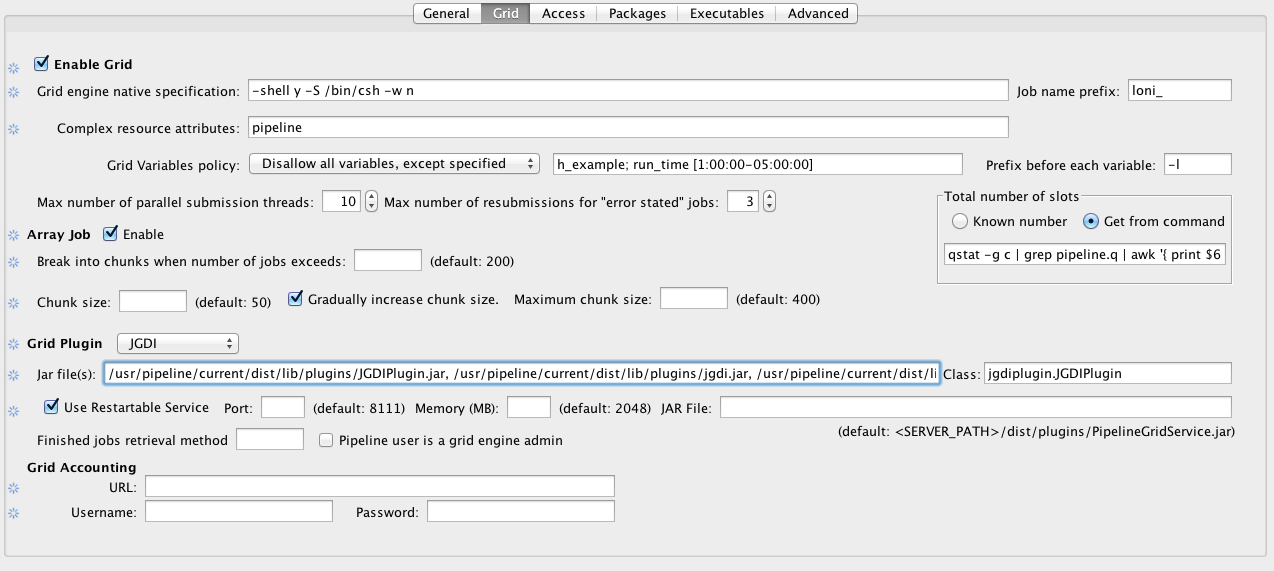
Interface Overview
The Grid tab lets you specify the grid-related parameters for the Pipeline server. If it’s not enabled, all jobs will run locally on the Pipeline server machine.

3.2.2.1 Grid engine native specification

This field lets you specify a native specification string that goes along with your job submission (if none of that makes any sense, just skip this preference because you don’t need to use it on your server). On the LONI Pipeline server we use the following native specification preference:

-shell y -S /bin/csh -w n -q pipeline.q -b y _pmem _pstack _pcomplex _pmpi -N _pjob

The native spec you should use for your installation will vary, but if you’re using an Oracle Grid Engine (previously known as Sun Grid Engine) installation and you want to use the same string, you’ll want to change the -q pipeline.q to reflect the submission queue (if any) that you will be using.

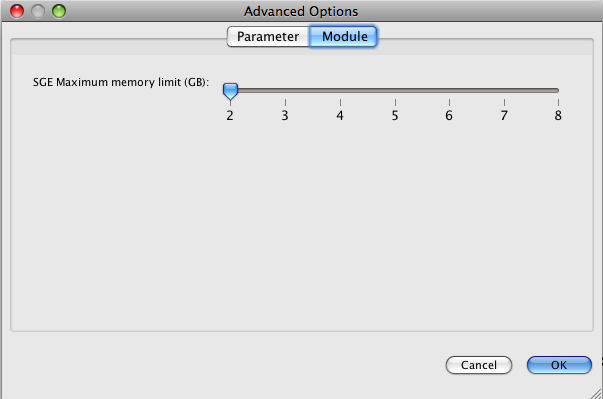
Optionally, you can add _pmem and _pstack to the native specification. _pmem enables user define maximum memory per module, and _pstack enables user to define the stack size. Both of these can be configured by the user using the latest Pipeline client, and they all use the default set by the grid engine unless user specifies.

You can also add following:
_pcomplex which refers to Grid complex resource attributes.
_gridvars which refers to Grid Variable Policy ( Available since version 5.3)

3.2.2.2 Job name prefix

In some environments, server admins may want to visually see which jobs are submitted by pipeline and which jobs are not. This can be done by setting prefixes for all jobs which are started by pipeline. The “Job name prefix” field expects a string value which will be prepended on each job’s name. For example, you could set the value of it to “pipeline_” and all job names will start with it ( i.e. pipeline_echo, pipeline_sleep, pipeline_bet, pipeline_reallign, etc. ).

IMPORTANT: This change will be in effect ONLY if Grid Engine Native Specification contains the _pjob value. The “_pjob” value sets the name of each job with the same name as executable filename. If _pjob is not specified, then prefix won’t be prepended to job’s name.

3.2.2.3 Grid complex resource attributes

Grid complex resource attributes lets the Pipeline server check for the jobs which are submitted by Pipeline but not monitored by it anymore. This happens when the job is in a submission process and the server turns off. When the job submission is complete and Pipeline is down, the job id will not be written in the Pipeline database. Which means that this job will use the slot, but Pipeline will not “remember” the job id. When server restarts it gets the list of running jobs on cluster and compares with its database. To determine which jobs are submitted with current server Pipeline uses grid complex resource attributes. When Pipeline finds jobs which are submitted by current Pipeline but are out of control, it deletes them to free up the slot.

This tag allows you to assign custom complex attributes to all submitted jobs by the server, which will make jobs identifiable. You can have multiple values in the tag seperated by comma. For example
pipeline, serverId=server1
Following defines two attributes 1) pipeline which is equal to TRUE and 2) serverId which is equal to server1.

This tag is just a definition of complex attributes. In order to use them you have to define _pcomplex in Grid engine native specification. In our case, the _pcomplex will be replaced with -l pipeline -l serverId=server1 when submitting the job to the grid.

Note that the Grid manager has to be configured properly to accept jobs with given resource attributes.

3.2.2.4 Grid Variables Policy

Starting from Pipeline version 5.3, server administrators are able to control grid engine variable usage and set restrictions to them and their values.

By default, if nothing is set, Pipeline will not allow any grid variables to be used by users.

To configure Grid Variable Policy, open the Configuration tool’s Grid Panel and follow the example instructions below:

Let’s say we want to give users a permission to use variables h_vmem and h_stack. So we need to select “Disallow all variables, except specified” from drop down box Grid Variables policy and write in the textbox semicolon separated values:

h_vmem; h_stack

As each grid engine is different, there can be different formats of how to specify grid variables. For example for SGE we need to have “-l” prefix before each resource value. So we need to put “-l” in “Prefix before each tab” field.

Any of these variables may require a suffix to be attached after their values, for example in SGE h_vmem needs to be written in following format h_vmem=5GAs you can see there is a G suffix and we need to have that in our policy.

To introduce the suffix, we will change the “Grid Variables policy” to:

h_vmem [G]; h_stack[m]

Where “G” is the suffix for h_vmem variable and “m” is suffix for h_stack. After saving this change, without any server restart, Pipeline will not allow any grid variable to be used other than these two.

Alternatively Pipeline administrations can set limits for values, for example if we want h_vmem to have value from 1Gb to 8Gb and h_stack from 0mb to 256mb, then we’ll need to have following configuration:

h_vmem [1-8G]; h_stack [0-256m]

If you want to specify some specific values, but not ranges of numbers, then you have to use following syntax:

h_specific_value ( valueX, valueY, valueZ )

If you combine this with previous configs, then you’ll get:

h_vmem [1-8G]; h_stack [0-256m]; h_specific_value ( valueX, valueY, valueZ )

So as you can see, ranges must be specified with following format [Min-Max Suffix] and specific values must be ( Comma, Separated, Values )

Another option is to allow everything except some of the variables, this has the same format and in order to use it, select “Allow all variables, except specified” item from drop down box.

And finally, you can set multiple ranges for each variable. This becomes useful when you want to give a choice of suffixes to users. For example if you want your users be able specify the h_vmem and in Gigabytes and in Megabytes. So the configuration should look like this:

h_vmem [1-8G, 1000-8000M]; h_stack [0-256m]; h_specific_value ( valueX, valueY, valueZ )

If the user doesn’t specify a suffix to value ( for example : 4 instead of 4G ) then Pipeline will automatically use configured suffix. If there are multiple suffixes, Pipeline will set the first suffix as default.

NOTE: The Grid Variable Policy will be enabled only when there is _pgridvars variable defined in Grid Engine Native Specification field. Otherwise, the Pipeline validation will only validate grid variables, but will not include them in job submission specification. Here is an example of native specification which will enable the Grid Variable Policy:

-shell y -S /bin/csh -w n -q pipeline.q -b y _pgridvars _pcomplex _pmpi -N _pjob

So if you want to use Grid Variable Policy, make sure you have _pgridvars variable defined in native specification.

Please see Grid engine native specification for more details.

3.2.2.5 Grid maximum submit threads

This field lets you specify the number of parallel job submissions. For example, if you specify 1, it will submit jobs one by one. If you specify 10, it will allow maximum of 10 parallel submissions at a time.

3.2.2.6 Grid total slots

The Pipeline client lets user to see the activity of the Pipeline server, how busy the server is and how many total slots are available on the grid. These total slots fields tell the server how many total slots available on the grid either dynamically (by running the command) or statically (by providing a number).

Grid total slots command asks for a command line query to get the total number of available slots for the queue that the Pipeline server is using. Refer to your cluster management documentation for the appropriate query. By using this tag, the server will query the grid engine periodically to get the latest number of available slots, and update the number automatically, and broadcast the new number to clients.

The grid total slots field lets you give the number of total grid slots for the cluster. This number is less accurate if the slot counts on the grid changes regularly.

You can provide both dynamic command and a static number, server will use the dynamic command first, and if it doesn’t work, it will use the static number.

3.2.2.7 Max number of resubmissions for “error stated” jobs

When submitting jobs to the grid, jobs can fail before starting to run. For example, if the job submitted with sudo but the node where the execution started doesn’t have information about that user, then the grid engine would complain and put the job in error state. In this case, it is possible that resubmission of this job would put the execution in another node which doesn’t have the same problem.

This property tells pipeline how many times to resubmit the job after its state is set to “error”. Please note that this doesn’t mean that every execution which fails pipeline will try to resubmit, no, it will not resubmit any job which execution successfully started but the exit code of the executable is other than 0. For example, if you run cp command with one argument, it will fail, but pipeline won’t resubmit it because the execution has been successfully completed independent of its result.

3.2.2.8 Array jobs

Sometimes job submission can take a long time when each instance of a module is submitted as an individual job. Array jobs solve this problem and dramatically improve the job submission speed. Starting from version 5.1 you can enable array jobs on the Pipeline server so instead of submitting individual jobs it can submit array of jobs. This feature improves the speed of submission especially for modules with multiple hundreds/thousands of instances. Dependent of the module’s number of instances there is 10%-65% speed improvement when using array jobs versus individual jobs.

Parameters

When a workflow is started and it contains a module with large number of instances, submitting array jobs small number of tasks at the beginning will be time efficient.

Before submitting the job array, Pipeline has to create a special script and configure it for each instance. This procedure takes time and during the preparation grid engine will be idle. For example: Let’s say we have a module with 1000 instances. It will take shorter time to prepare 50 jobs for submission than 1000 jobs. So you can configure the value of “break into chunks when number of jobs exceeds“, which tells Pipeline to split into chunks instances of those modules which has cardinality X and more. It is a positive integer number and indicates the minimum cardinality value the module is required to have in order to split into chunks.

The chunk size tells the Pipeline server the size of an array job. So if we set break into chunks when number of jobs exceeds 200, and chunk size 50, and user submits a workflow with 200 instances, the Pipeline server will divide them into 4 array jobs, each with 50 instances.

Sometimes after the first chunk it is better to gradually increase chunk size, because after the first chunk submission the grid engine will not be idle and we can afford submitting larger array jobs. If this is enabled, after the first submission the Pipeline server will double the chunk size upon each iteration.

For example: If we have a module with 1000 instances and chunk size is 50, break into chunks when number of jobs exceeds 200, then it will submit array jobs with following sizes

Array Job # Number of instances Total submitted so far
1 50 50
2 100 150
3 200 350
4 400 750
5 250 1000

The maximum chunk size sets the upper limit of the increase. The Pipeline server will double the chunk size for each array job until the maximum chunk size is reached.

There is one special case: during the submission Pipeline checks how many instances remain to be submitted and when the remaining is more than the limit but there is only less than 10% left, then remaining instances will be carried with last job array. Here’s is an example with total of 768 instances.

Array Job # Number of instances Total submitted so far/ Remaining
1 50 50 / 718
2 100 150 / 618
3 200 350 / 418
4 418 768 / 0

The last 418 is more than the specified 400. But 418-400=18 which is less than 76 ( 10% of total 768 instances).

3.2.2.9 Grid plugin

The Pipeline server lets you create your own plugins to communicate with various Grid managers (see also Pipeline Grid Plugin API Developers Guide). Pipeline package contains two built-in plugins for Oracle Grid Engine (previously known as Sun Grid Engine) which are JGDIPlugin and DRMAAPlugin. In installed package of Pipeline, under the lib directory there is directory called plugins in which you can find these two plugins.

If you are using either JGDI or DRMAA, just select it under the drop down, everything will be filled in for you. If you are using your customized plugin, you need to specify the jar file location, and class name of the Plugin used by Pipeline.

IMPORTANT: Some plugins require to be defined in class path. For example DRMAA Plugin requires from you to put the path of drmaa.jar in class path when starting the server. So to start the server with DRMAA plugin you need to have

$ java -cp .:/usr/pipeline/dist/lib/plugins/drmaa.jar
Pipeline.jar server.Main

3.2.2.10 Finished job retrieval method

This option is mostly for advanced cases. When Pipeline server restarts,it is possible that some of the jobs which continue to run will finish while the server is offline. In this case when server starts up in needs to get information about the finished job from grid engine’s accounting database or files or some other place. Different grid plugins have different options for retrieving information about finished jobs. For example, the JGDI Plugin supports the option for retrieving information from SGE’s ARCo database. It may be possible that the same plugin has different methods to get that information and in that case Pipeline server administrator would want to choose the method.

This property requires a string value which will be sent to the grid plugin. Most of the grid plugins have their default methods for retrieving job information. In those cases this property is not needed to be set. For example, if we want to use ARCo database from JGDI plugin we could just leave this property empty ( as ARCo database is the default method for JGDI plugin ) or just simply set it to “arco”. Please refer to grid plugin documentation to get more information about what methods they support and how to configure them.

3.2.2.11 Pipeline user is a grid engine admin

When privilege escalation is set to true, pipeline submits jobs on behalf of the users who submit the workflow. If Pipeline user is a Grid Engine admin ( configured by grid engine administrators ) and if it is able to delete any users jobs, then this property is recommended to be unchecked as the performance will be faster.

When this checkbox is selected, then pipeline will tell the grid plugin to kill the job on behalf of the user. For example in SGE that call would be sudo -u #user qdel #jobId*, where #user is the username and #jobId is job’s Id.

3.2.2.12 Grid job accounting

After Pipeline server restarts some jobs may already been finished or changed their status. This events haven’t been caught as Pipeline server was not running at that moment. In order to get the status of “missed” events, Pipeline gets information from configured Sun’s Accounting and Reporting Console (ARCo) database. Note this feature is only tested for Oracle Grid Engine (previously known as Sun Grid Engine) with JGDI and DRMAA plugins, if you are using another grid manager, and it does not work, please report it on our Pipeline forum.

Assuming ARCo database is configured and running (refer to ARCo website and your system administrator for help). To configure ARCo database in Pipeline you need to put information about the database URL, username, and password. The URL looks like this:

jdbc:mysql://hostname/db_name

3.2.3 Access
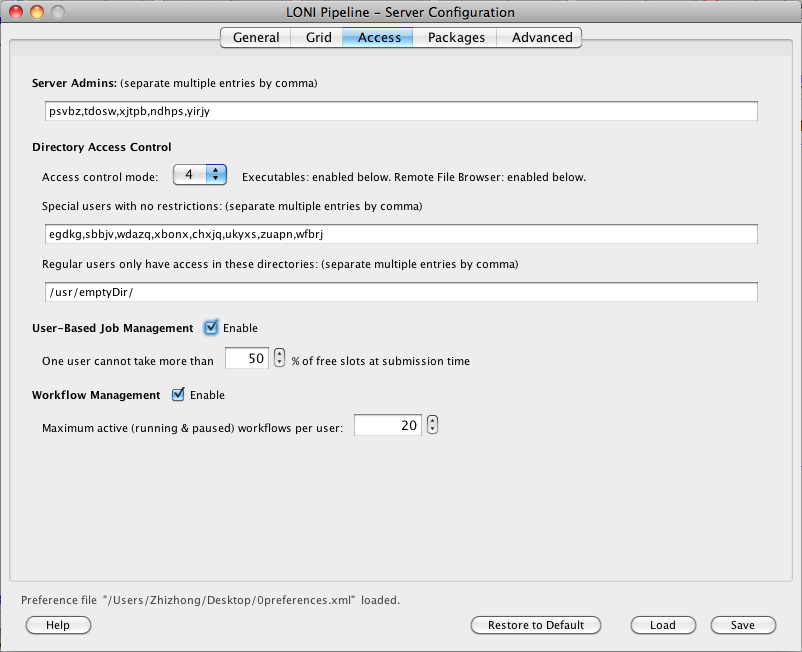
Interface Overview
The Access tab lets you configure user-access and workflow management for the Pipeline server.

3.2.3.2.1 Server admins

This field lets you specify a list of user names that are Pipeline server admins. Pipeline server admins can connect to the server via Pipeline Server Terminal Utility to monitor and manage the server. They can view, stop, delete anyone’s workflows on the server, view a list of connected users and their IP addresses, server’s memory and thread usage, as well as edit all the server preferences discussed on this section.

If there’s no server admin specified yet, you need to directly edit server’s preferences.xml file. The xml element is called ServerAdmins. For example, if you want john and jane to be server admin, then preferences.xml file should look like this:

<preferences>
...(other items)...
<ServerAdmins>john, jane</ServerAdmins>
</preferences>

After saving changes to preferences.xml file, you need to restart Pipeline server.

3.2.3.2.2 Directory access control

The Pipeline server lets you control user access on the executables/modules they can run and files they can browse on the server.  Below is a matrix chart for different mode:

Mode Executables Access Control Remote File Browser Access Control
0 Never Never
1 No with exceptions Never
2 Yes with exceptions Never
3 No with exceptions No with exceptions
4 Yes with exceptions Yes with exceptions
5 No with exceptions Same as shell permissions
6 Yes with exception Same as shell permissions
7 Same as shell permissions Same as shell permissions
8 Users with shell access: Same as shell permissionsUsers without shell access: Yes with exceptions Users with shell access: Same as shell permissionsUsers without shell access: Yes with exceptions

Never means Pipeline server will not do any access control restrictions for any user. Note this will not affect operating system’s authentication and access control, in other words, the credentials required to connect to the Pipeline server and the rights required to execute programs will not be affected by the settings here. No with exceptions means access control is not enabled for all users except those marked in controlled users will be restricted. Yes with exceptions means all users will be restricted except for those specified in controlled users will be allowed. Same as shell permissions means the remote file browser will act as if user logged in to the server using shell.

Controlled users
This is a list of users separated by commas (i.e. john,bob,mike) which will indicate conditional users. Depending on the control mode, These users will be restricted or allowed.

Controlled directories
This is a list of directories separated by commas (i.e. /usr/local,/usr/bin), which will be the only directories allowed for restricted users.

Examples
We want to restrict user john, bob, mike to execute programs only in: /usr/local and /usr/bin, and let every user browse using remote file browser as shell does, we would have these configurations:
Mode: 5
Controlled users: john,bob,mike
Controlled directories: /usr/local,/usr/bin

Another example, if we want to restrict all users to execute programs only in: /usr/local and /usr/bin, but allow users john, bob, mike to run without restrictions, and let every user browse using remote file browser as shell does, we would have these configurations:
Mode: 6
Controlled users: john,bob,mike
Controlled directories: /usr/local,/usr/bin

3.2.3.2.3 User management

Pipeline version 5.1 introduces new user management feature. It has a special algorithm that provides a fair share resource to all users.

How it works
When enabled, you need to set up a percentage that will limit each user’s jobs. The percentage is calculated by taking the number of free slots at submission time.

For example: the Pipeline server has 150 slots available and the user management percentage is set to 50%.

The first user will be able to use 50% of 150, so 75 slots will be used by user A.
Then User B will be able to submit 50% of free slots which is 50% of (total 150) – (user A’s 75) = 50% of (free 75) = 37 and so on.

Pipeline server constantly checks and monitors the user usage and adjusts each user’s limit.

3.2.3.2.4 Non-user-based Job management

Pipeline version 7.0 introduces new job management feature that has limits independent of the limits on the user who submitted it. The job management algorithm has been updated to consider both user management and job management factors when decided to run a job.

How it works

<EnableNodeManagement>true</EnableNodeManagement>
<ControlledNodes>
<node name=”ControlledModule1″ limit=”200″ />
<node name=”ControlledModule2″ limit=”150″ />
</ControlledNodes>

When enabled, you need to set the module name and limit for number of jobs that can be run by a module with this name. The limit is global across all users and jobs submit via Pipeline.
For example: A user runs a module named ControlledModule1 which submits 180 jobs. Other users who run modules with this same name (name only, the actual definition of the module is not considered) will find that this module can only submit 20 jobs and the rest will get backlogged. This assumes that their user quota (see above) has not been reached yet. If they user quota is already reached, Pipeline will not submit any jobs.

This feature is useful for jobs that have special limitations that need to be enforced. For example, a job that communicates with some external service and you don’t want to overload this service with thousands of requests. You can create a uniquely named module to describe this job and limit it across the server to protect resources.

3.2.3.2.5 Workflow management

Workflow management lets you manage active (running and paused) workflows per user on the Pipeline server. If it’s enabled and a limit has been set, the number of active workflows for any single user will not exceed the limit. Any workflow submitted after the limit is reached will have a backlogged status. They will be queued until any of the user’s running workflows completes.

3.2.4 Mappings

Updated: The Packages and Executables tabs are now disabled when running configuration tool. Instead, you can edit by connecting to the running Pipeline server using Server Terminal > Preferences tab. All the values under Packages and Executables tabs will be dynamically updated without restarting the server.

The Packages and Executables tabs give the administrator the ability to configure mappings that allow for Pipeline workflow portability between Pipeline servers. In particular, information about an executable (in the form of the executable package, version, or name) can be used to determine where that executable resides on a given file system and whether it requires the setting of certain environment variables. The following sections describe this interface in greater detail.

3.2.4.1 Packages
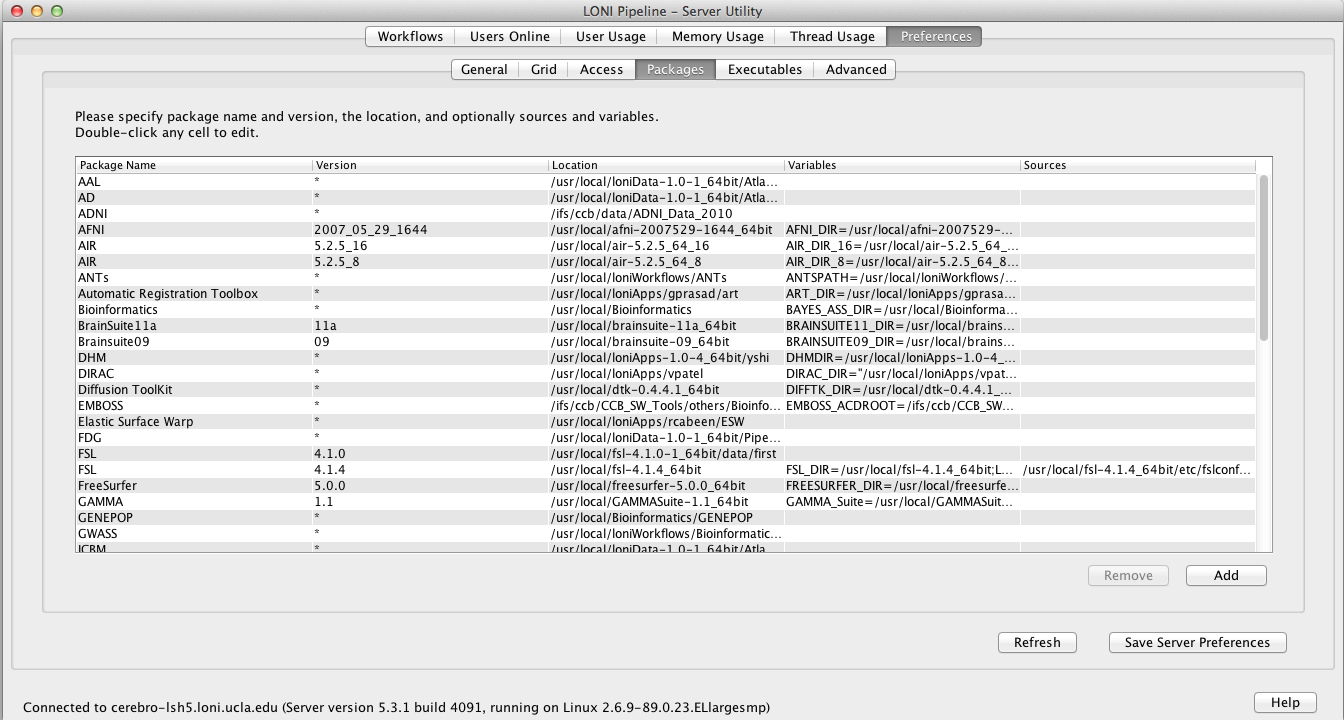
Interface Overview
The Packages tab allows you to set up a list of available packages/tools and their locations on the server. This allows the Pipeline server automatically correct user-submitted module’s executable location based on its package name and version.

There are five columns in the table, package name and version, location, variables and sources. Package name and version are used to compare against user-submitted module definition, they should uniquely identify a package on the server. Version value can be empty which corresponds to empty version in the module’s definition. Package location is the local path to the package where all the executables are located. Variables and sources are optional, which defines environmental variables needed for the package (in name=value format) and scripts to be sourced before running respectively.

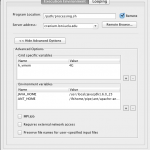
To add a package, click on Add and put name and version of the package. You can double-click on any of the columns to edit them, for Variables and Sources, you’ll see a new dialog pops up after the double-click, to let you easily input multiple entries. To delete a package, just select it and click Remove. Make sure to hit the ‘Save Server Preferences’ button to save the settings.

3.2.4.2 Executables
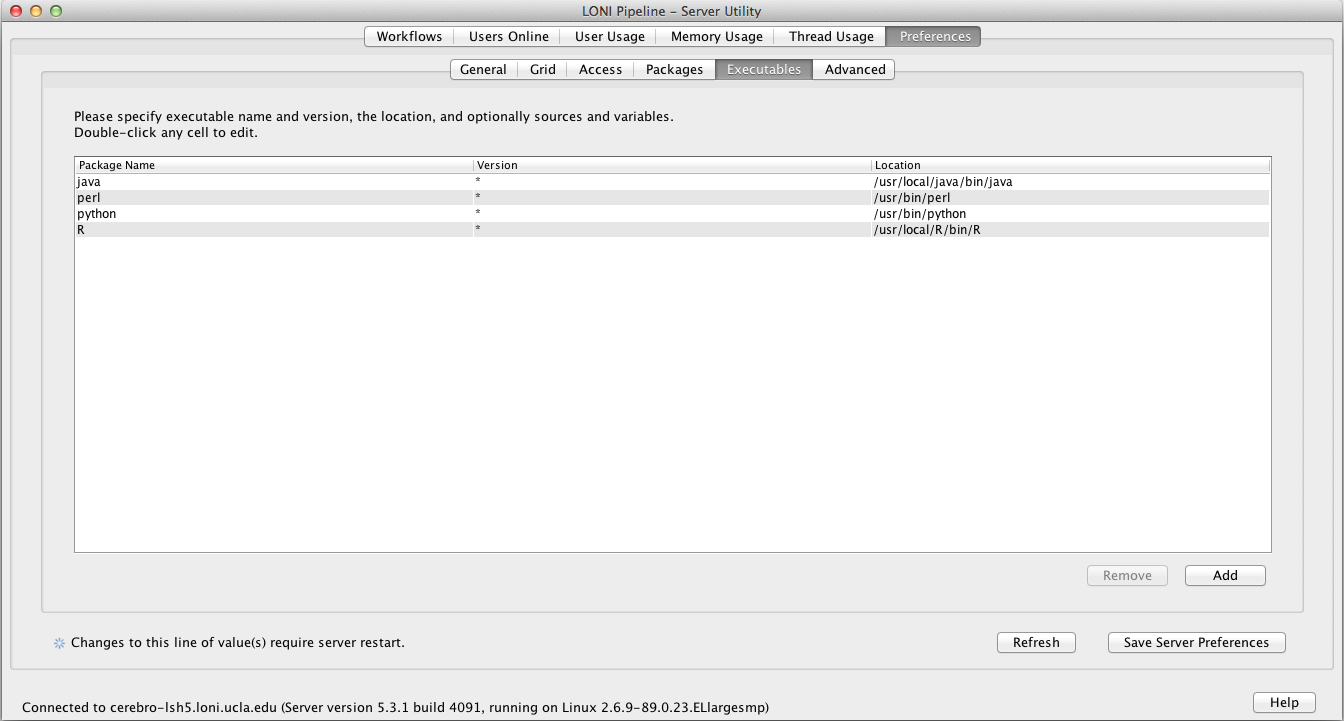
Interface Overview

The Executables tab improves the portability of Pipeline modules in the following sense. If we have a Pipeline module that runs /usr/bin/java -jar /usr/local/some_package-1.0/bin/program.jar, we can use the package mapping utility (described above), to say that program.jar belongs to the package ‘some_package’, version ‘1.0’, include this information in both the Pipeline module definition and the Packages tab in the server terminal GUI, and we would be able to share this module with a user connecting to a different Pipeline server (with the proper configuration). However, we are still assuming that both systems have /usr/bin/java. With the executables mapping, the executable name ‘java’ can be configured to map to any location, making the module fully portable.

Much like the Packages tab, the Executables tab allows the administrator to create a correspondence between executables and their location in the relevant filesystem. In this case, the interface has three columns. In the first column, the user needs to specify the executable name (e.g., java, perl). The second column requires the user to specify a version number for the executable. This can be useful if Pipeline users are utilizing several different versions of an executable and need to be able to specify the version needed by a particular Pipeline module. If the version number is not relevant, an asterisk (*) can be used to indicate any version. Finally, the last column, labeled ‘Location,’ is used to indicate the path on the grid’s execution hosts where the executable resides (e.g., /usr/bin/java).

To add an executable, click on Add and enter the executable filename, version, and full path. To delete an executable, just select it and click Remove. Again, make sure to hit the ‘Save Server Preferences’ button to save the settings.

3.2.4.3 Utilities

The Pipeline makes use of several utility plugins and the amount of these plugins will undoubtedly increase as the Pipeline grows. Currently, the three independent applications that the Pipeline uses are Smartline, XNAT, and IDA. These java applications are completely portable; they are packaged as jar files and are included in the standard Pipeline distribution. When setting up a Pipeline server, the administrator needs to perform three steps to ensure that these tools can be used by Pipeline clients which connect to it. First of all, the xnat, smartline, and idaget directories need to be moved to a common location. Secondly, this directory needs to be configured into the Package Mapping for the server. In particular, the package name “Pipeline Utilities” with the generic version “*” should map to /path/to/utilities, where /path/to/utilities is a directory containing the xnat, smartline, and idaget directories. This can be done very easily under the Preferences->Packages tab in the Server Terminal Utility. Finally, the path to Java needs to be configured using the Preferences->Executables tab in the Server Terminal Utility. The Package Name should be “java”, the Version should specify the version of java (or you can enter “*”), and the Location should be the path to java on your grid’s execution hosts.

3.2.5 Advanced
Interface Overview
The Advanced tab allows you to set up a list more advanced features.

3.2.5.1 Failover

The Pipeline server has an automatic failover feature. It is available on server running UNIX/Linux/Mac OS X. Failover improves robustness and minimizes service disruptions in the case of a single Pipeline server failure. This was achieved by using two actual servers, a primary and a secondary, a virtual Pipeline Server name, and de-coupling and running the persistence database on a separate system. The two servers monitor the state of its counterpart. In the event that the primary server with the virtual Pipeline server name has a catastrophic failure, the secondary server will assume the virtual name, establish a connection to the persistence database and take ownership of all current Pipeline jobs dynamically.

Requirements
3 separate hosts (1 master, 1 slave, 1 persistence).
Virtual IP address of the server.
User who runs pipeline should have full access to execute command ifconfig

How it works
Server of Host B pings to server Host A every 5 seconds (the interval is configurable). When there is no response (timeout) it retries ping for 3 times (the number of retries is configurable) and if all retries are unsuccessful then Host B creates an IP alias on network interface specified by and and switches to Master mode.
Alias interface
This specifies the name of interface on which the Pipeline server will create a sub interface to do IP aliasing.
Alias sub interface number
This specifies the sub interface number on which Pipeline should create the alias IP Address. If nothing specified, Pipeline will automatically find first available sub interface number and will add IP Alias on it. For example if your primary interface is eth0 and eth0:0 and eth0:1 are busy with another IP addresses, Pipeline will use eth0:2.
WARNING: If one of sub-interfaces contains IP Address of specified Hostname, Pipeline will give an error and exit.
Post failover script
This is the path to a script which will be called after the master server’s process terminates.

Instructions how to configure failover

  1. Copy pipeline server files and preferences file to two different hosts, let’s say Host A and Host B. Also we will need database to be in third host (Host C).
  2. Put the hostname and persistence information to server preferences. Under Advanced tab, check Enable failover, give alias interface and change other parameters if needed.
  3. Start the persistence database on Host C.
  4. Start the Pipeline server on Host A. It is the master server.
  5. Start the Pipeline server on Host B. It is the slave server. When Host A goes down, Host B will take over.

3.2.5.2 Log email

The Pipeline server can send log messages via email. Specify recipients email address (separate multiple entries by comma), the sender, and SMTP host. The Pipeline server will not send more than 1 message within 10 minutes. If there’s a lot of log messages, it will combine them and send in 1 email every 10 minutes.

3.2.5.3 Network

The packet size is the size in bytes of the Pipeline communication packets between the server and the client. The timeout specifies the timeout in seconds of the Pipeline communication protocol.

3.2.5.4 Maximum number of threads for active jobs

As the server becomes busier and busier, at times users may be submitting more jobs at once than the server’s capacity to handle. You can set up maximum number of threads for active jobs to prevent this. Active jobs are submitting, queued, running jobs. When number of active jobs reaches the maximum limit, server will put new jobs into a backlogged queue. When there is an available slot for execution the first job in the backlogged queue will be submitted. For grid setups, you should probably have the limit higher than the number of compute nodes available to you, because submitting to the grid takes a non-negligible amount of time, and it’s best to keep your compute nodes crunching at all times.

3.2.5.5 HTTP query server

The Pipeline server provides API for querying workflow data, including session list, session status, output files. It is helpful when you (or your program) want to query workflows on Pipeline server, without the need of Pipeline client. Please note, once enabled, it does not require any login authorization to see any workflows on the server. By default, this feature is not enabled on the Pipeline server. To enable, check Enable HTTP query server under Advanced tab and put a port number, for example 8021.

When the server is running, you can go to http://cerebro-rsn2.loni.usc.edu:8021/ and it shows an XML file listing all the APIs. Currently there are five functions:

  • getSessionsList
  • getSessionWorkflow
  • getSessionStatus
  • getInstanceCommand
  • getOutputFiles

getSessionsList returns all the active sessions on this Pipeline server. It does not take any argument, and the query URL looks like this:
http://cerebro-rsn2.loni.usc.edu:8021/getSessionsList

The Pipeline server returns an XML file listing all the active sessions, with their session IDs.

<sessions count="1">
<session>
cerebro-rsn2.loni.usc.edu:8020-453da129-c81b-4473-9fc0-8fe03481e492
</session>
</sessions>

getSessionWorkflow returns the workflow file (.pipe file). It takes session ID as argument. The query URL looks like this:

http://cerebro-rsn2.loni.usc.edu:8021/getSessionWorkflow?sessionID=cerebro-rsn2.loni.usc.edu:8020-453da129-c81b-4473-9fc0-8fe03481e492

getSessionStatus returns the status of the workflow execution, when it started, if it has finished, what time it finished, what are the nodes and instances in this workflow, and for each node, if they finished successfully. The query URL looks like this:

http://cerebro-rsn2.loni.usc.edu:8021/getSessionStatus?sessionID=cerebro-rsn2.loni.usc.edu:8020-453da129-c81b-4473-9fc0-8fe03481e492

getInstanceCommand returns the command of the execution. It takes session ID, node name (which can be found by calling getSessionStatus), and instance number (which can also be found by calling getSessionStatus). The query URL looks like this:

http://cerebro-rsn2.loni.usc.edu:8021/getInstanceCommand?sessionID=cerebro-rsn2.loni.usc.edu:8020-453da129-c81b-4473-9fc0-8fe03481e492&nodeName=BET_0&instanceNumber=0

getOutputFiles returns the path of output files generated by the node. It takes session ID, node name, instance number, and parameter ID. The query URL looks like this:

http://cerebro-rsn2.loni.usc.edu:8021/getOutputFiles?sessionID=cerebro-rsn2.loni.usc.edu:8020-453da129-c81b-4473-9fc0-8fe03481e492&nodeName=BET_0&instanceNumber=0&parameterID=BET.OutputFile_0

3.2.5.6 Automatically clean up old files

If Automatically clean up old files in temporary directory is checked, then any session in the temporary directory that are older than two times the days to persist status will be removed. This will not happen under normal circumstances, because persistence database keeps track of all sessions, and no temporary directories older than days to persist status should exist. It happens in rare situations such as when the Pipeline server restarts with its persistence database manually deleted, or the temporary directory was used by other programs, and so on.

3.2.5.7 Maximum number of metadata threads

This specifies the maximum number of metadata generator threads used in workflows with Study module.

3.2.5.8 Warn when free disk space is low

If enabled, Pipeline will warn when temp and home directories’ free space goes below the specified %.

3.2.5.9 Server status

The server status refresh interval specifies how often should the server checks for grid usage counts and sends the information to the clients.  The connected clients will get the server status information.

3.2.5.10 Directory source recursive timeout

This specifies the maximum time allowed in seconds of the recursive directory source listing feature.  When user specifies a directory that contains lots of sub directories and files, the recursive directory source listing may take a long time. This timeout value limits the time allowed for a recursive listing on a directory.

3.2.5.11 External network access queue

This specifies the queue that has external network access enabled on its compute nodes. Some module may require external network access, and the general queue for the Pipeline server may not have that. By setting up a special queue that has external network access, user can submit modules with external network access checked on their Pipeline client, and the server will submit the jobs on that queue.

3.2.5.12 Validation warning

When there’s a missing input file or executable path in a workflow, and user tries to submit the workflow, Pipeline gives a validation error and asks the user to correct the invalid file. But in some circumstances the file may not exist yet at validation time, and will be valid at a later time, and as a result the workflow can’t be used as is. Validation warning solves this issue. If enabled, such invalid path will result in a warning message and user can proceed to submitting the workflow by dismissing the warning.

3.2.5.13 NFS directories for validation

If Pipeline server is used in grid environment, a shared file system such as NFS is often used. If user specified a valid file under non-NFS directory, it would pass validation but likely cause problem as the file is not accessible on each compute nodes. This issue can be solved by specifying all NFS directories of the system. Validation will catch files that are not under these specified directories.

3.2.5.14 Check and verify output files

If this option is enabled, Pipeline server will check the existence of output files after the module completed successfully. If output file was missing while the executable exited normally (return value 0), Pipeline will report the module as error/failed and not continue to the subsequent modules.

3.2.5.15 Test server library

By pressing the button, it will generate the instructions for testing the server library workflows. It uses command line interface to batch validate workflows, so you know if there’re any issues with your server library workflows.

Previous: 2. Installation Table of Contents Next: 4. Authentication
  1. Distributed Pipeline Server Installation Utility
    1. Requirements
    2. Warning
    3. Downloading
    4. GUI
      1. Start the Installer
      2. Select Components
      3. Install Grid Engine
      4. Install Pipeline
      5. Install Neuro Imaging Tools
      6. Install Neuro Bioinformatics Tools
      7. Finish Install
      8. Start the Server
    5. Command Line Installation
    6. Troubleshoot
  2. Conventional Installation (without DPS utility)
    1. Requirements
    2. Downloading
    3. Starting the server

2.1 Distributed Pipeline Server Installation Utility

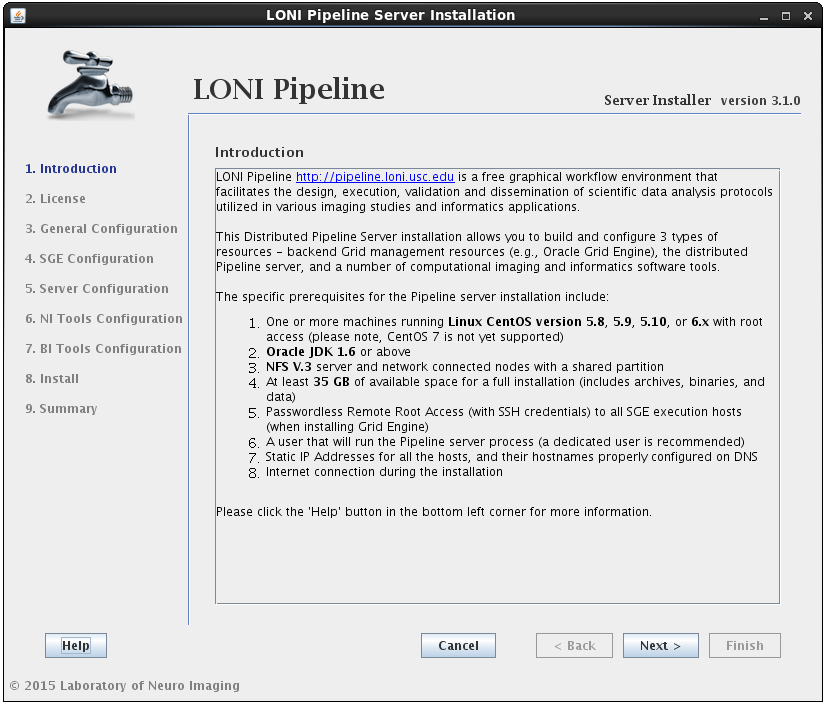
The Distributed Pipeline Server Installer is a GUI installer that allows you to install and configure 3 types of resources – backend grid management resources (Grid Engine), the Pipeline server, and a number of computational imaging and informatics software tools. After successfully running the installer, you will have a running Pipeline server with grid engine managing jobs on your machine(s), imaging and informatics software tools installed, as well as a set of predefined workflows and modules in your server library.

2.1.1 Requirements

The requirements for the Pipeline server installation can be found on Distributed Pipeline Server Installer page.

Warning: If any of the requirements are not met, there may be unexpected behavior in the installer (e.g. hanging, crashing). If you have any questions, please contact pipeline@loni.usc.edu

A complete installation (including grid engine, the Pipeline server, and all software tools) can take several hours. However, this is mostly because some of the tools take a long time to download (e.g. FSL can take up to 6 hours, depending on your internet speed). If you skip the tools or have already downloaded the ones that require manual download, the total installation time is less than 30 minutes.

2.1.2 Warning

When you run the DPS installation utility to install the Pipeline server, the underlying scripts will edit the firewall rules to open up the Pipeline port for connections from clients. Be forewarned that these changes can cause unexpected results on your system. We recommend backing up your iptables before starting the installation. In the future, this automatic configuration step will be made more robust.

2.1.3 Downloading

Download the installer from the Pipeline website, under Downloads > Distributed Pipeline Server Installer.

2.1.4 GUI

The graphical interface of the DPS utility simplifies the installation experience for the user by hiding unessential details and only asking the user for minimal configuration preferences. The steps are documented below and are accompanied by screenshots.

2.1.4.1 Start the Installer

To start the installer, open a terminal, change directories to the directory where the installer file is located, and type

su root (how to become root)
tar -zxvf pipelineServerInstaller.tar.gz
cd pipelineServerInstaller
./launchInstaller.sh

2.1.4.2 Select Components

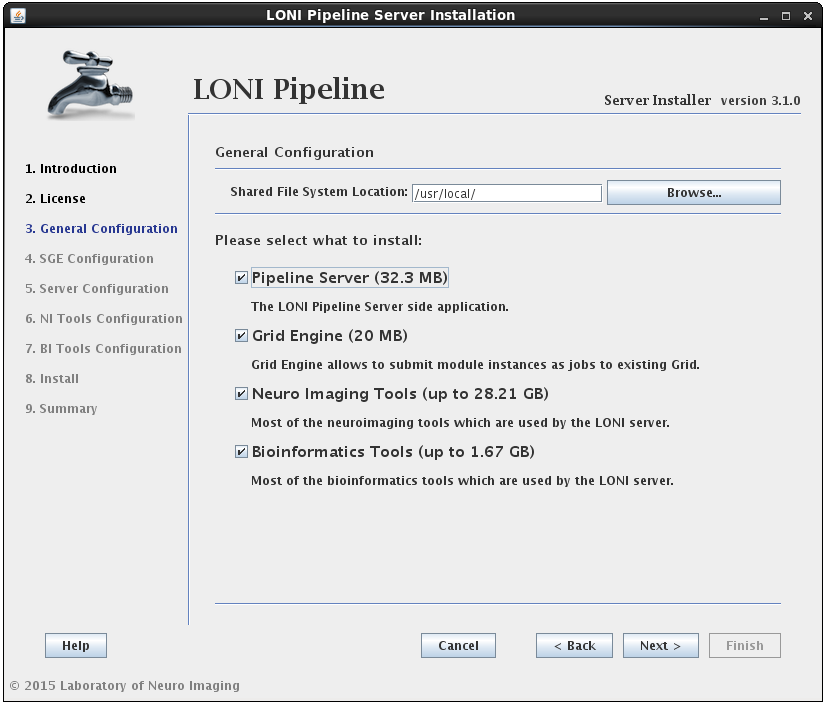
After reading and agreeing to the license, you will be asked for an installation location and what components you want to install:

You can select any* or all of the components. It will guide you through all the steps needed for the installation.

* For example, if you have already installed SGE before launching this installer, then deselect the Oracle Grid Engine component. Likewise, if you only want to install the latest tools, you can select the Neuro Imaging Tools component and uncheck the rest.

The installer will verify the Shared File System Location given. It is required to have it on NFS if the server is set to use a grid. The shared file system is used for the Pipeline server to store intermediate files of workflows and to install Grid Engine and Tools.

2.1.4.3 Install Grid Engine

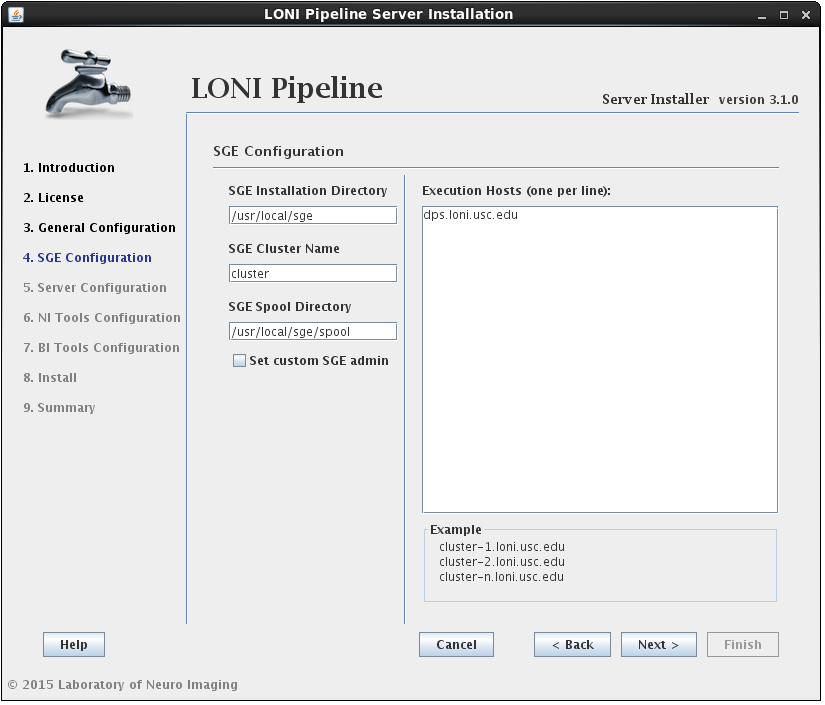
In this section you can configure Grid Engine installation. You can specify an installation location, cluster name (which uniquely identifies a specific Grid Engine cluster), spool directory (for spooling data), and execution hosts (hosts that execute the tasks (jobs)). You can leave installation location, cluster name and spool directory as they are, but you must provide a list of hostnames. You must provide fully qualified domain names, so something like “host1”, “localhost” or “127.0.0.1” is not allowed.

2.1.4.4 Install Pipeline

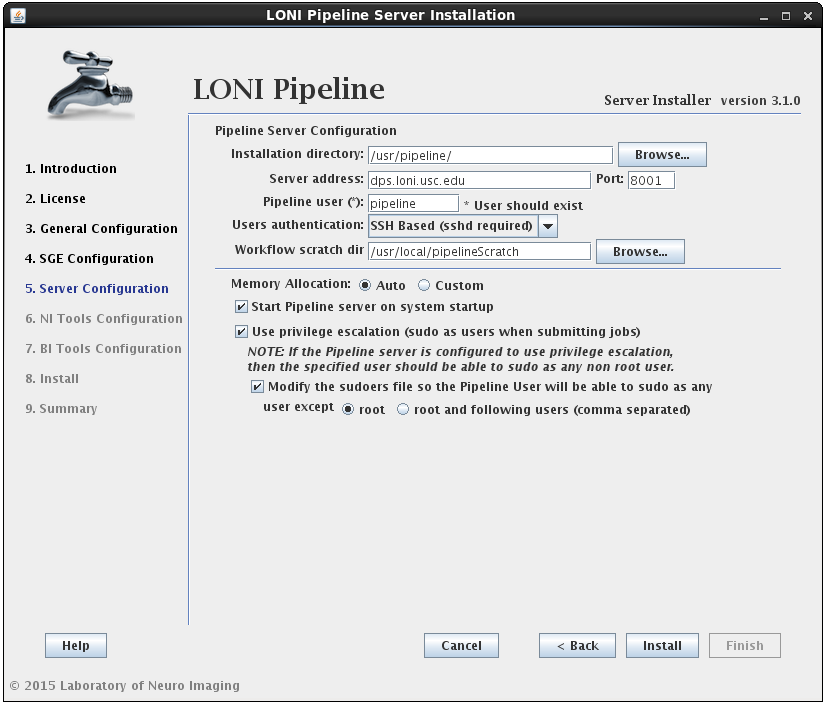
In this section you can configure the Pipeline server. You can specify an installation directory, Pipeline server address, port and user to run the Pipeline server process. The username must already exist and you can have the option to have its sudo file modified to accommodate privilege escalation.

User authentication lets you specify the authentication mechanism for the Pipeline server. If you already have NIS configured (there are plenty of online help resources, e.g. configure NIS server and client), it’s recommended to select the NIS option. Otherwise, you can select SSH Based option, which runs ssh command to test the provided credential. You can also choose No Authentication to let anybody connect to your sever. This option should only be used for testing and on a server with limited internal network access.

If the modify sudoers file option is selected, the installer will modify the operating system’s sudoers file so that the Pipeline server user will be able to sudo as any user, except root and the optional list of users provided. For example, if you have some user that can sudo as root, then this user should be listed as an exception, so that the Pipeline user will not be able to gain root access.

Install Pipeline with SGE already installed

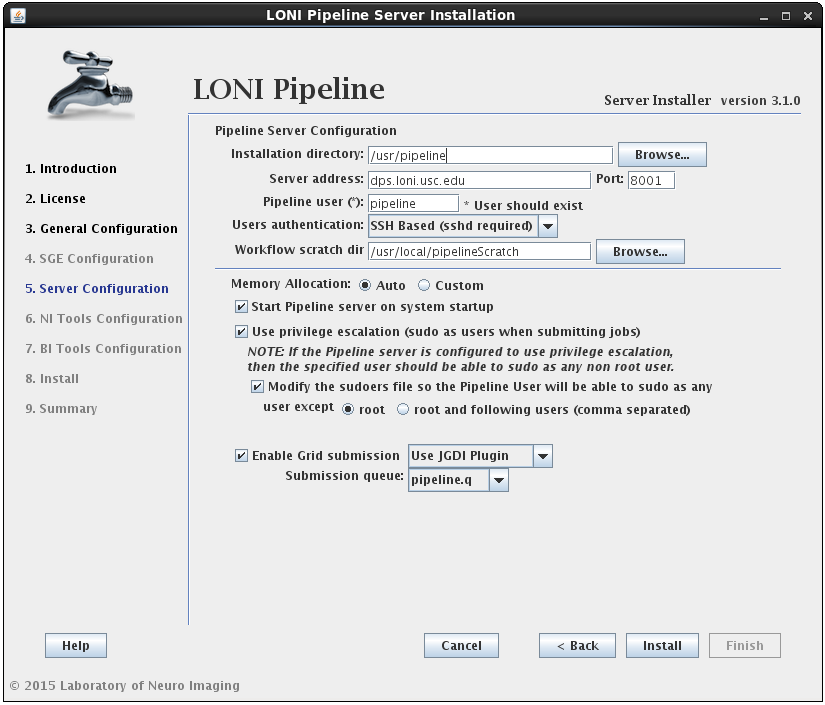
If you already have SGE installed and the SGE_ROOT variable is defined on your system, you can skip SGE installation by unchecking the Oracle Grid Engine checkbox from step 3 (General Configuration). The Pipeline configuration window will now have an additional checkbox to “Enable Grid Submission” which needs to be selected if you want to use Pipeline with your pre-installed SGE.

Upon checking the “Enable Grid Submission” checkbox, you will need to select a grid plugin. In order to communicate with SGE, Pipeline uses Grid Plugins. LONI provides two plugins for SGE: JGDI Plugin and DRMAA Plugin. If you are using SGE we highly recommend using JGDI Plugin as it supports more Pipeline features and is more reliable. You can choose DRMAA Plugin if you have other DRMAA supported Grid Manager installed and want to integrate Pipeline with it.

The last step is to choose the submission queue. The installer will list all of your available queues and you have to pick one for Pipeline. If you don’t have a special queue already set up for Pipeline then you can use the default queue of SGE (all.q). If you do not have any queues defined in SGE, you will have to create one yourself.

Installing Pipeline without SGE

If you don’t have SGE installed, and you uncheck the Oracle Grid Engine checkbox from step 3 (General Configuration), the installer will install Pipeline without Grid Engine. All jobs submitted to the Pipeline server will run locally on the server. You have to be careful with number of jobs submitted to the server as high number of jobs will negatively affect the server’s performance. Please see Maximum number of threads for active jobs if you want to set limits on the number of parallel running jobs.

2.1.4.5 Install Neuro Imaging Tools

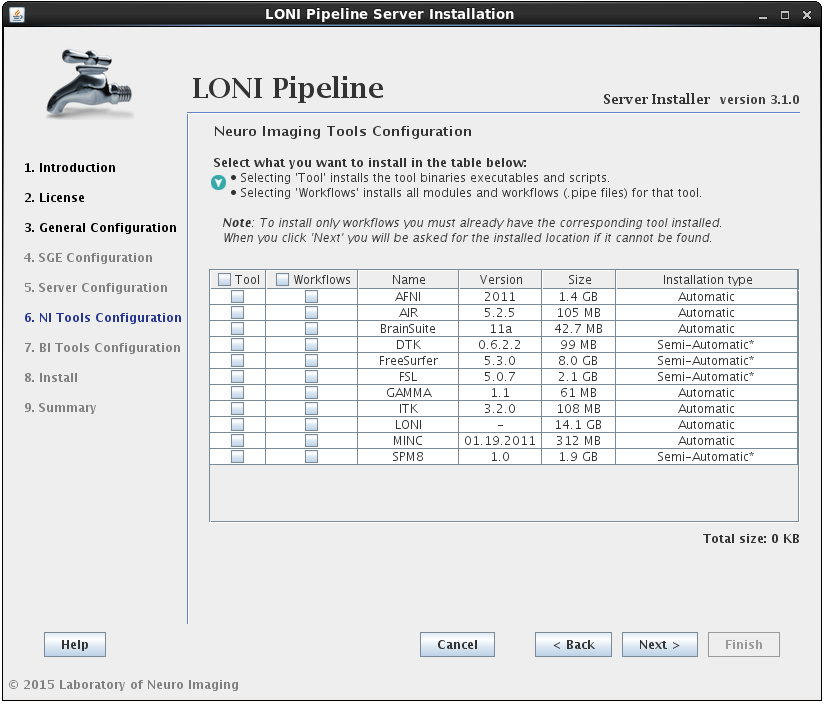
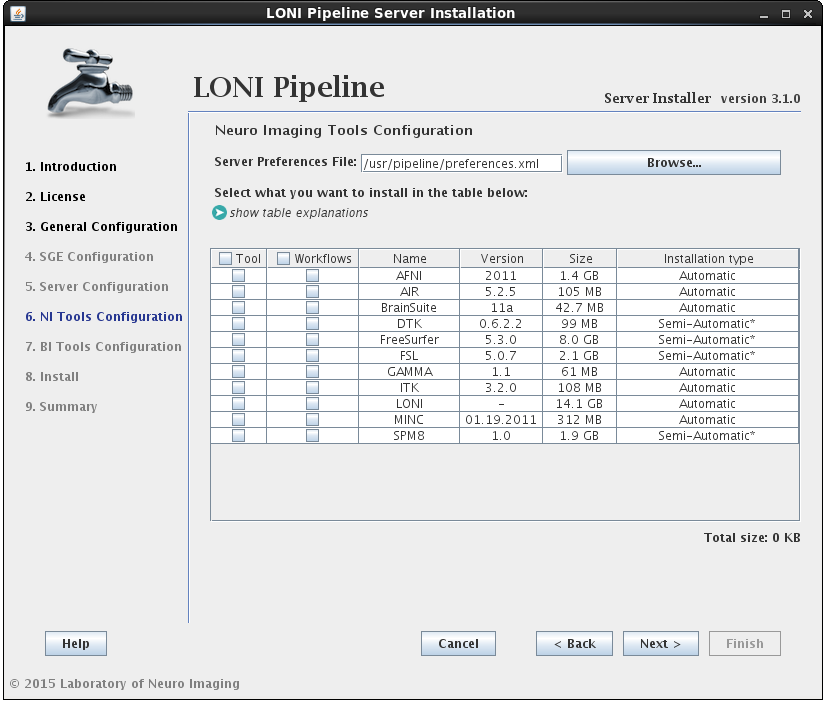
In this section you can select which imaging software tools and server library files to install.

There are two components that can be selected for each NeuroImaging tool:
     • the tool itself (binaries, executables, and scripts)
     • the modules/workflows (.pipe files) associated with that tool.

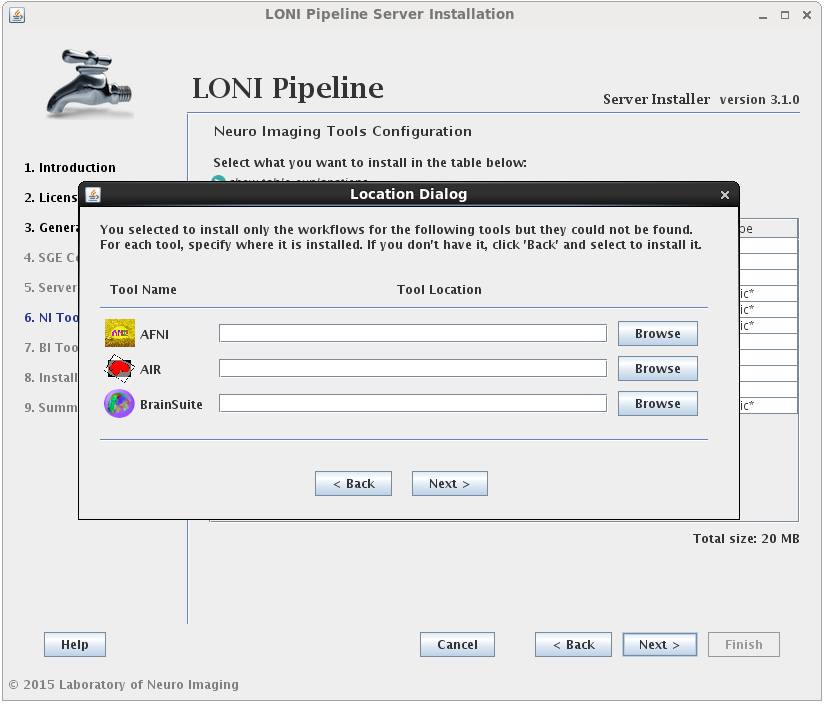
You may select either or both options for any tool, but please note that you can only install workflows for tools that are already installed or you have selected to install.I f you select to install the workflows for a tool but not the tool itself, and the tool cannot be found in the default installation directory (shared file system path + “tools”) then you will be prompted to provide where that tool is installed (second image). If you find yourself here by mistake, click back and modify your selection.

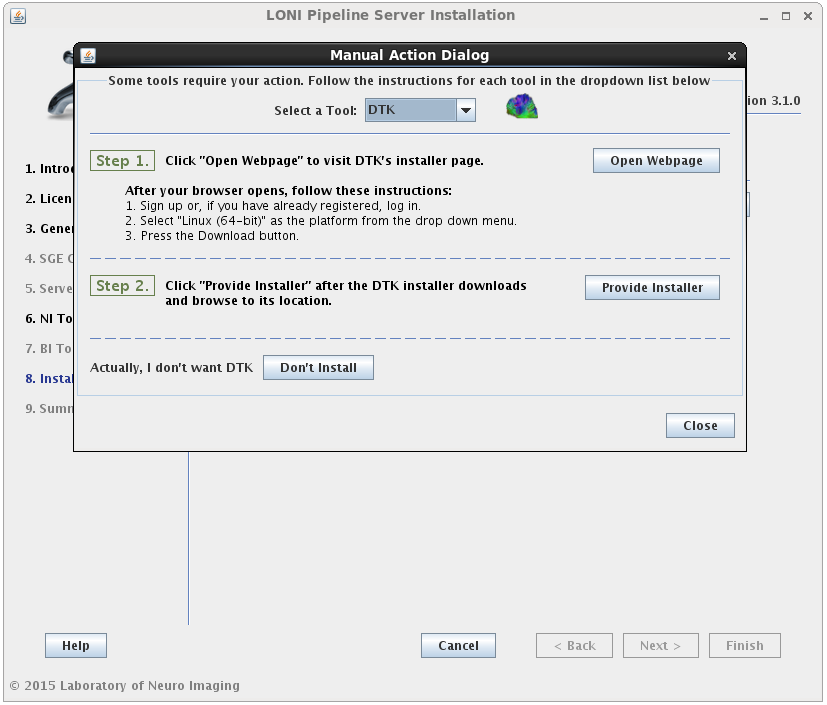
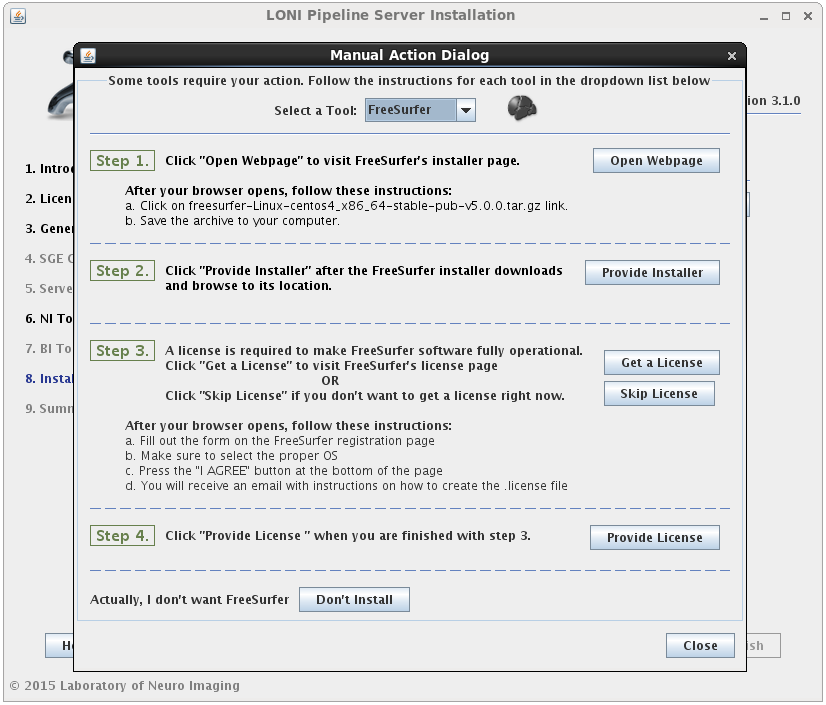
If the installation type for a tool is “Automatic”, it will be installed automatically without the need for user input. Some tools are marked as “Semi-Automatic” (e.g. FSL and FreeSurfer), which means that they require you to manually download the installer files for that tool from the developer’s website. This is because of the licensing restriction imposed on the software. For these types of tools, you will be shown a window after clicking ‘Next’ which contains instructions on what website to visit, which files to install, and any other requirements for that tool.

When you satisfy all the requirements for a tool, it will begin installing in the background immediately. A green check mark will appear next to that tool in the drop menu, indicating that you have provided the necessary information and can move on to the next tool. You may preemptively cancel the installation of a tool by clicking the ‘Don’t install’ at the bottom of the window. When all tools are either installing or cancelled, this window will close automatically.

Install the tools without installing Pipeline or SGE

If, at a later time, you want to install updated versions of some tools, you can have it installed without installing the Pipeline and/or SGE. Simply check only the NeuroImaging Tools in the general configuration section of the installer, then click Next and it will go directly to the tools installation step, skipping the Pipeline and SGE installation steps.

Please note that NeuroImaging tools can only be installed if you also selected to install the Pipeline Server or already have the server installed. If you select to install these tools without selecting to install the server, and the preferences.xml file cannot be found in its default location, a browse button will appear so that the location to your preferences.xml file can be provided. If you don’t have a preferences file, it means you have not installed the server yet and it should be selected during the installation process.

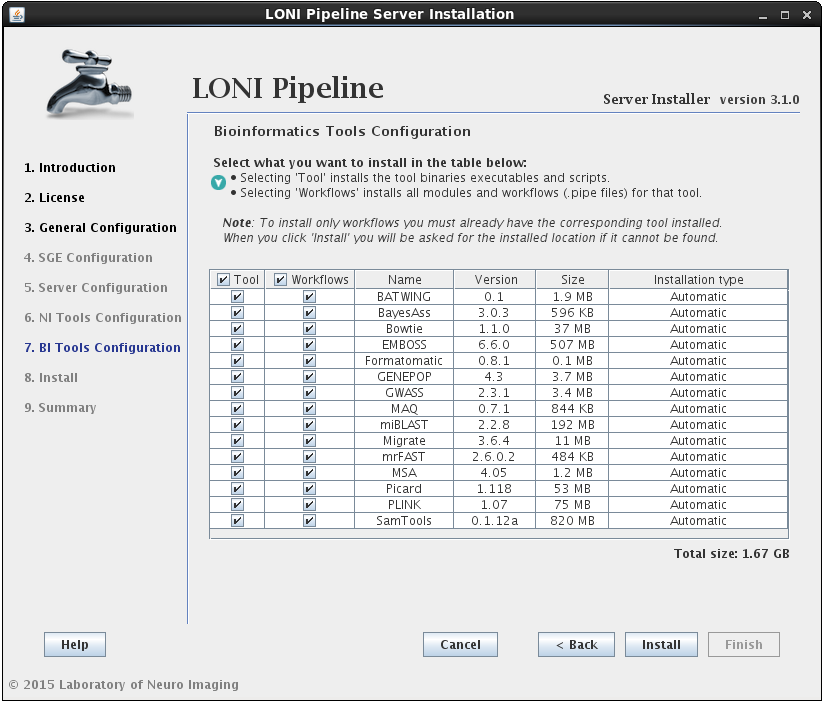
2.1.4.6 Install Bioinformatics Tools

The process for installing Bioinformatics Tools is the same as NeuroImaging (outlined in the previous step) except there are currently no “Semi-Automatic” tools in this section. Note this is the final step before the Pipeline installation utility takes over and starts to download/install files so only hit ‘Install’ if you are sure that all of your previous settings are correct.

Install the tools without installing Pipeline or SGE

Just as with NeuroImaging tools, Bioinformatics tools can only be installed if you also selected to install the Pipeline Server or already have the server installed. If you select to install these tools without selecting to install the server, and the preferences.xml file cannot be found in its default location, a browse button will appear so that the location to your preferences.xml file can be provided. If you selected NeuroImaging tools as well and already indicated the path to your preferences file in the NI Tools Configuration panel, you will not see this button.

2.1.4.7 Finish Install

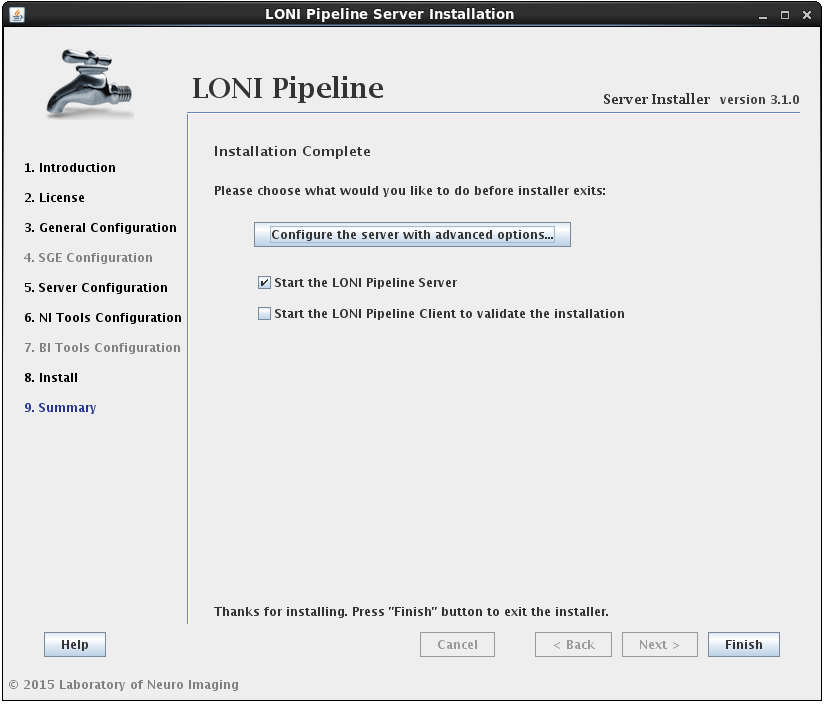
After the installation has successfully completed, you will be shown a summary screen. Clicking the Finish button with “Start the LONI Pipeline Server” checked will exit the installer and launch the Pipeline server. You can also check the “Start Client to validate the installation” option to launch the client and test run a workflow.

Additionally, you may want to configure advanced server preferences by clicking on “Configure the server with advanced options…”. This will automatically open the server configuration tool, where you can edit the details of your server.

If you have any questions, please contact pipeline@loni.usc.edu

2.1.4.8 Start the Server

If you checked the “Start the LONI Pipeline Server” option on the summary page of the installation, the Pipeline server process will be started. To check the logs of the Pipeline server, go to the Pipeline server’s directory (/usr/pipeline by default), specified in the Install Pipeline step. You will find files called outputStream.log and errorStream.log, which store output and error stream information. You can verify if the server started successfully by checking the contents of the outputStream.log file. It should look something like this:

[ 1/6 ] Connecting to Persistence Database..............DONE [117ms]
[ 2/6 ] Starting server on port 8001....................DONE [1152ms]
[ 3/6 ] Loading server library..........................DONE [31ms]
[ 4/6 ] Loading server packages info....................DONE [7ms]
[ 5/6 ] Checking to resume backlogged workflows.........DONE [0ms]
[ 6/6 ] Checking to resume active workflows.............DONE [0ms]
[ SUCCESS ] Server started.

You can stop and start the Pipeline server by calling (root access required):

/etc/init.d/pipeline stop
/etc/init.d/pipeline start

The Pipeline and persistence database will be started/stopped in order, and the pipeline user will run these processes.

If you don’t have root access, you can stop and start the Pipeline server as the pipeline user. It will be equivalent to the init.d method above. To stop and start the Pipeline server, go to the Pipeline server’s directory and type

./killServer.sh
./launchServer.sh

Always check if the server has started successfully by viewing the outputStream.log file. If it shows error on persistence database, you can stop and start the persistence database process by typing:

./db/stopDB.sh
./db/startDB.sh

After the persistence database has been restarted, restart the Pipeline server as noted above.

2.1.5 Command Line Installation

An alternative to using the GUI to install the Pipeline server is an automated method that relies on a configuration file. All of the fields that are entered via the GUI are represented within a hierarchical XML file. A default configuration file is included in the distribution directory (dist/install_files) of the installer, which you can download here). After you set up your configuration file, you can run the installation in automatic mode by typing the following into your shell:

tar -zxvf pipelineServerInstaller.tar.gz
cd pipelineServerInstaller
./launchInstaller.sh -auto dist/install_files/DefaultInstallationPreferencesFile.xml

A complete template for the XML file can be found here. If you use this template as a starting point, note that it has a lot of placeholders and is not set up to run “as is”, so you would have to make many modifications. For reference, each of the tags is documented below:

  • DistributedPipelineServerInstaller: root tag, contains all other tags
  • SharedFileSystemPath: path to a directory that is shared (via NFS) between the host running the Pipeline server and qmaster, admin, and execution hosts of SGE
  • JDKLocation: only include this tag if you don’t already have Oracle JDK running on the host where you’re installing the Pipeline server; the value should be the path to the JDK RPM, which you can install from the Oracle page
  • PipelineServer: use attribute enabled=”true” to indicate that you would like to install the Pipeline server; the children of this element will specify information about the server installation
    • InstallLocation: specifies location where Pipeline server is to be installed
    • Hostname: specifies the hostname of the host where Pipeline server is being installed
    • Port: specifies port on which the Pipeline server will be accepting connections from clients
    • Username: specifies user that will be running the Pipeline server
    • TempDir: specifies a directory where Pipeline modules will write intermediate files
    • ScratchDir: specifies a scratch directory where sample workflows will write their outputs; this value then becomes available to users through the pre-defined ${tempdir} variable, documented here
    • GridSubmission: use attribute enabled=”true” to indicate that you would like the Pipeline to submit jobs via grid engine to execution hosts; otherwise, the jobs will be run locally on the host running the Pipeline server
      • GridPlugin: options are JGDI or DRMAA
      • GridSubmissionQueue: the SGE queue where Pipeline should submit its jobs
    • UsePrivilegeEscalation: options are true or false; privilege escalation is documented here
    • DBInstallLocation: path to a directory where you would like to install the Pipeline database; if it doesn’t exist, it will be created by the installer
    • StartPipelilneOnSystemStartup: set value to true if you would like to configure the system to start the Pipeline server on startup; false, otherwise
    • AuthenticationModule: options are SSH, NIS, and NoAuth; these are documented here
    • ModifySudoers: use attribute enabled=”true” to indicate that you want to add the Pipeline user to the sudoers list
      • SuperUsers: comma-separated list of users that you don’t want the Pipeline server to sudo as (default: root)
    • MemoryAllocation: specify the amount of memory you would like to allocate to the Pipeline server/database, in megabytes
  • PreferencesPath: if the Pipeline server is not being installed (i.e., the PipelineServer element is missing or has attribute enabled=”false”), then the user must specify the path to the Pipeline server preferences file (by default, the path is /usr/pipeline/preferences.xml); if the Pipeline server is being installed, you can omit this element.
  • SGE: use attribute enabled=”true” to indicate that you would like to install Son of Grid Engine; the tags that follow will describe some of the preferences for the installation; you can find documentation on SGE here
    • SGERoot: path to directory where you would like to install SGE (default: /usr/local/sge)
    • SGECluster: name of cluster that you would like to install (default: cluster)
    • SubmitHosts: specify hostnames of machines which will be configured to handle job submission and control; you can do this using one hostname per Host element, as children of the SubmitHosts element
    • ExecHosts: specify hostnames of machines which will be execution hosts; use same format as for SubmitHosts
    • AdminHosts: specify hostnames of machines that will be used for SGE administration purposes; use same format as for SubmitHosts
    • AdminUsername: user that will serve as SGE administrator
    • SpoolDir: path to a directory that will be used for spooling during installation
    • Queue: use attribute configure=”true” to indicate that you would like to configure a queue at the end of SGE installation; this is documented here
      • Name: the name of the new queue that you would like to configure
      • Hosts: the hosts that you would like to add to the queue
      • Slots: the slots that you would like to add to the queue (the difference between hosts and slots is documented here)
  • Tools: use the attribute enabled=”true” to indicate that you would like to install some tools; also use the path attribute to specify the directory where you would like to install the tools (note that this should be in an NFS-shared directory)
    • NeuroImagingTools: use the attribute enabled=”true” to indicate that you would like to install one or more NeuroImaging tools; true/false values for the all_executables and all_serverlibs tags indicate that you want to install the executables and/or .pipe files for all NeuroImaging tools, regardless of what values each tool is set to.
      • Available neuroimaging tools: AFNI, AIR, BrainSuite, FSL, FreeSurfer, LONI, MINC, ITK, DTK, GAMMA, and SPM; for each of these, the executables=”true” attribute is used to activate the tool installation and the serverlib=”true” attribute is used to activate the .pipe files for that tool; note that FSL, FreeSurfer, and DTK require that the user specify a sub element, namely ArchivePath, whose value is the path to the archive file, downloaded manually from the software website.
    • BioinformaticsTools: same attributes as NeuroImagingTools tag
      • Available bioinformatics tools: EMBOSS, Picard, MSA, BATWING, BayesAss, Formatomatic, GENEPOP, Migrate, GWASS, MrFAST, Bowtie, SamTools, PLINK, MAQ, miBLAST; again, the enabled attributes can be used to indicate activation or deactivation of installation for each of these elements

2.1.6 Troubleshoot

The following is a list of common problems and explanation:

– The provided directory seems not to be a network file shared (NFS) directory.
The installer will verify the Shared File System location given. It is required to be on NFS if the server is set to use a grid. The shared file system is used for the Pipeline server to store intermediate files of workflows and to install Grid Engine, NeuroImaging, and Bioinformatics Tools.

– For a Grid Engine installation, the local hostname cannot be “localhost” and/or the IP address is like 127.0.*.*
You must provide fully qualified domain names as hostnames (such as “host1″); “localhost” or “127.0.0.1″ is not allowed.

– Cannot enable Grid submission as SGE doesn’t have any queue.
If you do not have any queue defined in SGE, you have to create one yourself and recheck “Enable Grid submission” checkbox and select the queue.

– Why I can’t connect to the server?
If you have the Pipeline server running but you can’t have your client connect to it (shows “Server not found” message), you need to check your firewall settings and enable port 8001.

– Why is my first workflow taking so long?
When you have SGE installed and you submit jobs for the first time, it may take a long time to get the jobs running. This is because initially the SGE sees the compute nodes loaded heavily, but as time passes, the loading information will be updated more accurately.

2.2 Conventional Installation (without DPS utility)

If you’d like to install the Pipeline server by hand, here are some instructions on how to get started. Note that if you choose this route, you’ll have to carry out quite a bit of configuration on your own. This is only recommended if you’ve done it before or have a thorough understanding of the inner workings of the Pipeline server. Otherwise, use the DPS utility.

2.2.1 Requirements

The Pipeline server can run on any system that is supported by JRE 1.6 or higher, so the first thing to do is head over to the official Java website to download the latest JRE/JDK. If you run the server on Windows, you will not be able to use privilege escalation (you might not even need/want it). Also the Failover feature is only supported by Unix/Linux systems. All other features are available for all platforms.

The amount of memory required varies based on the load you will expect on the server, but for a reference point, as of summer 2010, the main Pipeline server running at LONI has been set to accept a max load of 620 jobs, and its memory footprint hovers between 50-300MB depending on the load and garbage collection scheme.

2.2.2 Downloading

Head over to the Pipeline download page and download the latest version of the program for Linux/Unix. The server and the client are both in the same jar file, so you only need to change the Main entry point when starting up the server. Extract the contents of the download to the location you want to install the server at.

2.2.3 Starting the server

Now let’s start the server for the first time. Get to a prompt and switch to the directory where you copied the Pipeline.jar and lib directory and type:

$ java -classpath Pipeline.jar server.Main

Assuming you have java in your path, you should have received the following message back in your terminal window:

[ 1/6 ] Connecting to Persistence Database..............DONE [61ms]
[ 2/6 ] Starting server on port 8001....................DONE [747ms]
[ 3/6 ] Loading server library..........................DONE [336ms]
[ 4/6 ] Loading server packages info....................DONE [2ms]
[ 5/6 ] Checking to resume backlogged workflows.........DONE [46ms]
[ 6/6 ] Checking to resume active workflows.............DONE [0ms]
[ SUCCESS ] Server started.

That’s not enough to have a fully functional server yet, but we’re a step closer, so go ahead and break out of the process by hitting Ctrl-C and then let’s begin configuration process.

Previous: 1. Introduction Table of Contents Next: 3. Configuration

Array Job Submission

The Pipeline server now supports array job submission via JGDI plugin. Array job improves the total processing time of a workflow by combining repeated jobs into one job. Everything is transparent to the users, with individual job’s output and error logs displayed as before. The total processing time on workflows with large number of instances will be improved dramatically.

User Management

User management is supported for Pipeline server. Once enabled, user’s job slot allocation will be based on the number of free slots on submission time and percentage allowed per user. This value is dynamically calculated and updated. User will also be able to monitor their own usage by clicking the server status label on the lower right corner.

XNAT Database

Pipeline now supports XNAT database. Collections on any XNAT server can be integrated as a module with output, by providing an XNAT catalog file and your XNAT credential. The module can be connected to any input processing modules. When executing, the compute nodes will download the data, convert to desired file type and proceed into the subsequent module. For more information, please refer to user guide – XNAT.

Server Configuration Tool


Server configuration tool lets Pipeline server administrators easily configure Pipeline server’s preferences. The tool includes all the preferences required and provides brief description for each field. It has five categories, General,  Grid, Access, Packages and Advanced.

MPI and Special Queue Support

Pipeline server supports MPI for SGE and a special queue with external network access enabled. With server support, user can right click on module and under Execution tab’s Advanced Options, provide MPI parameters or check the checkbox to enable external network access queue.

For detailed change logs, please check the release notes.

keywords: change log, release note

Study Module

Study

Study module incorporates imaging data and non-imaging meta-data, and enables queries, groupings and construction of study-designs based on user-specified criteria. A study module is similar to a data source and can be connected to the input parameters of other modules in the same workflow. It allows passing both imaging data and the metadata information to subsequent modules and all of this study information may be passed along throughout the pipeline workflow. The metadata may be used for setting up various conditional criteria in conditional modules. For more information, please refer to user guide – Study module.

Conditional Module

Conditional
 
Conditional module is used when the execution path of various inputs to a workflow is dependent on some criteria. Use of Conditional Modules makes the workflow more dynamic. You can create conditions based on files, metadata from Study, as well as arithmetic comparisons. For more information, please refer to user guide – Conditional module.

Newly Designed IDA

undefinedundefined
Pipeline now takes advantage of our cluster nodes to download files in parallel from the IDA database. This improves download time drastically, and you don’t have to keep connected to the server during the download. You can also enable metadata so that metadata files will be downloaded along with data as a Study module.

Newly Designed User Interface

undefined
You can open multiple workflows at the same time, using tabs or windows (just like a web browser). You can arrange tabs, drag and drop tab to have a new window, close any tabs by clicking the cross icon for the tab, and so on. You can also move over the tab that is not in current view, it will show you a small overview of the workflow.

Filetype Search

undefined
 
File types are now listed with name, extension and need file type. You can type your keyword to search for a specific file type. This makes file type selection much easier.

Smartline

Smartline
User can enable Smartline when designing workflows. Smartline is similar to a regular connection that it connects input and output. But unlike regular connections, it contains an automatic file conversion tool. Based on information about input and output, a Smartline can be drawn which takes care of any file translation needed. It is enabled by default, and you can disable it in your Preferences. For more information about Smartline, please check User Guide – Building a Workflow – Smartline.
Flow Control

Flow Control
New parameter type has been added for modules which called “Flow Control”. This type of parameter allows you to design an order between modules which do not exchange any data. Flow Control parameters have rhombus shape and their connect lines are dashed. As you can see in the picture there are three modules and they use the same data source. Flow control connections tell Pipeline that Second module will start after First module completes and Third module will start after second module completes.

Maximum SGE Memory Limit

Maximum SGE Memory Limit
A new variable has been added to module description which indicates maximum SGE memory limit for the module. This new option allows to specify custom memory limit from 2GB to 8GB ( default is 2GB ). See user guide for more details

Directory Source

Directory Source
Data sources have new “Directory Source” feature, which will ask for a directory as an input and use the content of the directory as input arguments for data source. For example if you want to use all images under some directory, you can specify directory location and Pipeline dynamically will use all images under that directory. Directory Source also supports filters which means that you can filter files which you want to use and select file type which will be used.

Screenshot/Print Workflow

Screenshot
You can now make a screenshot of the entire workflow, it will print the entire current workflow canvas to an image file with actual size (no scaling). This is helpful for publications and for sharing workflow without actually sending the .pipe file.

IDA translation

IDA translation
You can download records from LONI IDA and convert them to desired image format all in one step. You can download them as archived, Analyze Image, NIFTI, or MINC. After downloading the file, Pipeline will do the necessary conversion in the background. After it completes, a data sink with converted files will be created.

Validation Status

Validation Status
Validation reports more information about its progress. Now you are able to see which module is validating, how many modules left to validate, how many files left to validate. If your workflow contains data sinks which have more than 20 files in it, Pipeline automatically will navigate the screen on that data sink when its validation starts.

  1. Module definition
    1. Info tab
      1. General module information
      2. Citation information
    2. Parameters tab
      1. General parameter information
      2. Parameter types
      3. File types
      4. Parameter arguments size
      5. Advanced parameter information
        1. Select dependencies
        2. Transformations
        3. Output/Error stream extraction
        4. Metadata extraction
        5. Output list file
    3. Execution tab
      1. Executable location
      2. Advanced options
    4. Metadata tab – Metadata Augmentation
  2. Alternative methods
    1. From help file
    2. Module Suggest
  3. Module groups

6.1 Module definition

In order to create or edit module, you need to know how a module is defined. We will go over module definition below. You can create a module this way (there are other ways described below), or edit any attribute in a module.

6.1.1 Info tab

undefined
When creating a module, whether it’s a simple module or a module group, you will always encounter this tab for adding information about a module. While none of it is required, it helps to have the information.

6.1.1.1 General module information

  • Module Authors is a list of all the authors who contributed in describing the executable’s Pipeline definition.
  • Executable Authors is a list of all the programmers who contributed to writing the executable code.
  • Package is the name of the suite that the executable is a part of. For example, Align Linear is a part of the AIR package, Mincblur is a part of the MNI package, etc.
  • Version can refer to the package version or the individual executable version depending on how the developer manages their versioning. Use your best judgement to decide what would help users of your module definition more.
  • Name is the human readable name of the executable that you’re describing.
  • Description should describe what the program does and any pertinent information that might help a user who wants to use the module.
  • Icon In the top right corner of the tab is a large square button. Click on it to select an image for use as the icon of this module. You don’t have to worry about adjusting the size of the image to any special dimension (the Pipeline will take care of that for you). After you have selected an icon, there is a remove button that lets you remove the icon. You can also copy, paste, and remove the icon by right-clicking the module in the workflow and choose the appropriate action.

6.1.1.2 Citation information

When creating a module definition, it’s a good idea to enter citations of the papers/presentations/etc. that we’re used to develop the module. When this information has been entered, users can easily be linked to the citation material through the use of Digital Object Identifiers (DOI) or PubMed IDs.

To add a citation to the module, click on the ‘Edit’ button next to the citations pane. A new dialog will appear, and you can click the ‘Add’ button and type in a citation in the new text box that appears below. If you want linkable DOIs or PubMed IDs just make sure to type them in the format defined in the window, and the Pipeline will take care of the rest. An example citation could look like:

Linus Torvalds, Bruce Schneier, Richard Stallman. Really cool research topic.
In Journal of High Regard, vol. 2, issue 3, pages 100-105.
University of Southern California, April 2007. 10.1038/30974xj298 PMID: 3097817

You can even enter your citation information in bibtex format. When you’ve entered them all, click OK and you will see links to the DOIs and PMIDs that you’ve written into the citations.

6.1.2 Parameters tab

undefined
The parameters tab contains information describing the command line syntax of the executable you’re describing. As a learning aid, we can use a fictional program called foo with a command line syntax of:

foo [-abcd -e arg -farg1 arg2 arg3] file1 [file2 ...] -o outputFileArg

You’ll notice our program has several optional parameters at the beginning with only two required parameters towards the end. Now let’s go about describing this in the Pipeline.

6.1.2.1 General parameter information

If we look back at our fictional program command line syntax, we see it has 8 total parameters. Let’s start by adding the first 4 which are:

  • -a
  • -b
  • -c
  • -d

All four are optional and don’t require any additional arguments to them, so go ahead and click the ‘Add’ button 4 times to add 4 new parameters. Now for each parameter, edit the name to something meaningful. Notice on the right to the parameter name, there are two check boxes, Required and Input. Checking Required means this parameter is required by the executable. Checking Input means this parameter is input, otherwise it is an output. Leave Required unchecked and Input checked. In the bottom half of the window change the ‘Arguments’ selector box to ‘0’, which tells the Pipeline that these parameters don’t take any arguments from the user. Additionally, for each parameter, fill in the ‘Switch’ field in the lower part of the dialog to the appropriate value (-a or -b or -c or -d). At this point you may want to fill in a description for each parameter, so users will know what they do when they are turned on.

Because these parameters don’t take any arguments we don’t need to set the ‘Type.’ So far your screen should look something like the following figure:
undefined

Now that we’ve added the first four, let’s work on the next two parameters: -e and -f. Click ‘Add’ once for each parameter, and the Pipeline will add 2 more new parameters for you. Notice the order that you define the parameters, because that order is what the Pipeline will use to construct the command that gets issued to the system when it’s executing workflows. In case any of your parameters are out of order, just click and drag them each into the order that you want.
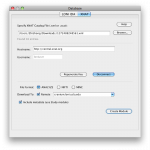
Again, both of these parameters are optional so there’s no need to check the ‘Required’ box in the parameter table. However, each of these are ‘String’ type parameters, so change the type from the default ‘File’ to ‘String.’ Also, notice that the -e takes in 1 argument and the -f takes in 3 arguments. Adjust each accordingly like you did with the previous parameters. Finally, enter the switch for each and give a helpful description of what each one does, so the end user can figure out how to work with the module.

There’s something peculiar about the -f parameter and that’s that it does not have a space separating it from its arguments on the command line. To tell the Pipeline about this in the module definition, uncheck the checkbox labeled ‘Space after switch.’

undefined

undefined

Let’s add the next parameter, so click ‘Add’ to place another parameter into the defintion. Another thing to notice about this parameter is that it takes 1 or more files, so we should set the ‘Arguments’ selector box to ‘Unknown’. Also, because this parameter takes files as its arguments, we leave the ‘Type’ set to the default, however we can tell the Pipeline a little more about this parameter by selecting the specific type of file that the program expects, so let’s select ‘Text file.’ This will help the Pipeline in checking for valid connections between different modules, or helping users in selecting files from their computer to be bound to this parameter when using the module. If the file type needed for a parameter that you’re defining is not listed, you can just leave it set to ‘File,’ which will accept any type of File.

Go ahead and add the last parameter (-o outputArgFile) to the definition. Because this is an output parameter, make sure to uncheck the input checkbox in the parameter table next to this parameter. Your definition should look something like shown on left.

6.1.2.2 Parameter types

When you come across programs that need other types of parameters, refer to this list for information about each type supported by the Pipeline:

Directory
Choose this type for inputs when a program expects the path to an _already existing_ directory.
Choose it as an output parameter if the program expects it as a path to write data out to. Please note that the Pipeline will not create output directories for programs. It will specify a path for a directory to be created at when generating commands, but the actualy directory creation is left up to the program.
Enumerated
This should be used for input parameters that accept an option that can be only from a limited set. For example, a program might one of the following: “xx”, “yy”, “zz”.
File
The most common type of parameter, but can be further categorized by choosing a file type defined in the Pipeline. (NOTE: Choosing file types allows the pipeline to establish connections between complementary parameters, and appends appropriate extension to intermediate files being created between modules, which some programs rely on.)
Number
Either a integers or floats
String
Any string of characters required by parameters
Flow Control
This type of parameter allows module to be started without transferring any data from parents. For example if you have two modules and they don’t share any parameter between them but you want one module to start after another, then you can connect them by using this type of parameter.

6.1.2.3 File types

undefined
undefined

If you have a module that has an input parameter of type File, you must specify at least one file type for the parameter. It can be the generic File, or a specific type of file. Pipeline has a set of predefined common file types. They are listed with name, extension and optionally need file type. The name describes the file type, the extension defines the extension of the file, and need file type tells whether it requires some additional file (e.g. Analyze image has an extension of img and need file hdr). You can type your keyword to search for a specific file type. If you don’t find the file type, you can also define your own file types.

If you need to define a new file type, click “Edit file types…” on Paremeters tab, and click on the + button. Enter in the Name, a description of the file type, the extension, and also any need file(s) that have to be associated with this file type. Click OK, and the newly defined file type will be added as one of the options in the Acceptable file types window. Please note: the Pipeline determines filetype compatibility between connected parameters solely by checking for matching file extensions. The name and description of filetypes is not compared during compatibility tests.

6.1.2.4 Parameter arguments size

Every parameter in the Pipeline needs to be assigned a number of arguments that it needs to accept. Except for enumerated types which are set to 1 automatically, for all other types, e.g. Directory, File, String, and Number, there are three cases for specifying arguments size.

In most cases this is simply some constant number (1,2,3,4,5,6,…). Simply check “Specified” button and specify the number of arguments next to it.

Sometimes for an input parameter could take any number (infinite number) of arguments. Simply check “Unknown” button.

Sometimes for an output parameter the size could depend on an input parameter. Simply check “Based on” button and in the drop down, specify which input parameter it depends on. Then when the module is executed in a workflow, the base parameter will have a number of arguments equal to the base parameter, which should have its arguments size set to ‘Unknown’ for any practical purposes. Let’s demonstrate this with an example.

undefined

Suppose you have a program that can take in an (theoretically) infinite number of inputs on the command line, and will process each of those inputs and create a corresponding output. Our command line syntax would look like the following:

./foo -inputs in1 in2 in3 in4... inn -outputs out1 out2 out3 out4... outn

So if we have 2 input files, we’ll have 2 output files; and if we have 25 input files, we’ll have 25 output files. To describe this in the Pipeline, make a new module with two parameters; one input and one output. Make the arguments size of the input ‘Unknown’ and the arguments size of the output “Based on” the name of the input parameter. Your module should then look something like shown here.

6.1.2.5 Advanced parameter information

undefined

While describing executables for use in the Pipeline, you will inevitably come across the need to use some of the advanced parameter features in the Pipeline. Right-click a simple module and select ‘Edit Module’ to bring up the editing dialog for the module. Click on the Parameters tab, select a parameter you want to edit, and then click on the ‘Advanced…’ button at the bottom right of the dialog.

6.1.2.5.1 Select dependencies

On the left side of the advanced parameter dialog, you’ll find a list of all the parameters in the module, except for the parameter that you’re currently editing. By checking a box for each dependency, you’re telling the Pipeline that if a user enables the current parameter (the one you’re editing), then you must also enable the following parameters (the ones you check in the advanced parameter dialog).

6.1.2.5.2 Transformations

Sometimes an executable will take in an output and will automatically create an output that is just some variation of the input. Let’s use an example:

./foo infile

Let’s assume the program creates the output to be the same name as the input but with a .out appended to it. To handle this, create an output parameter in the ‘Parameters tab’ and then click on the ‘Advanced…’ button of the output parameter. In the ‘Transformations’ area of the parameter set the base to the name of the input parameter. Then select the ‘Append’ transformation operation from the selection box and type in .out for the value. Click ‘Add’ and you’re done! You’ve just created a side effect output. Note that as a result of specifying a base parameter in this dialog, the default behavior of the Pipeline is to exclude the parameter from the command line. If you want to change this behavior, check the ‘Include transformed parameter on command line’ box. It will simply use the transformed name as the location of the output and pass that on to successive modules for usage. Here are descriptions about how the other transformations work:

Append
Add a string or regular expression to the end of the filename. Example: append:xxx
/tmp/myfile.img becomes /tmp/myfile.imgxxx
Prepend
Add a suffix string or regular expression to the filename. Example: prepend:xxx
/tmp/myfile.img becomes /tmp/xxxmyfile.img
Replace
Replaces every occurrence of the find value with the replace value.
Example: find:my replace:your
/tmp/myfile.img becomes /tmp/yourfile.img
Subtract
Remove the string or regular expression from the end of a file. If the string is not found at the end of the file, nothing will happen.
Example: Subtract .img /tmp/myfile.img becomes /tmp/myfile
Example: Subtract .hdr /tmp/myfile.img stays as /tmp/myfile.img

Note that the transformation operations are only applied to the filename of the base parameter, not the entire path. Also, if you don’t specify a base parameter, then the Pipelie will put this parameter on the command line, and will apply the transformations to the path string that gets passed on to the next module. If the parameter is an input, the transformations are applied to the incoming path string and then put on the command line. The transformations never change the actual filename, just the way references to them are made on the command line.

6.1.2.5.3 Output/Error stream extraction

undefinedundefinedundefined You can extract module’s output and/or error steams as an output parameter of the module. To do so, create an output parameter and specify type String or Number. Under General tab of the parameter, you will see Data Extraction section. There are two ways to extract strings (keys) from output/error stream, String Matching, which matches the string before and after the key, and Exact Location, which extract the key at the row and column coordinates. Exact Location works well if the text is tabular formatted, and columns are separated by a common special character, such as comma (CSV), space.

Example (String Matching)
Suppose your program prints the following text in standard out (output stream):
Right-Caudate=245
Right-Putamen=473
Right-Pallidum=158
Right-Hippocampus=192

Suppose you are interested in the value of Right-Hippocampus, you can specify String Matching with Right-Hippocampus as Start string, and empty End string. After the job is completed, the server will parse the output stream and find matches (if any). In this particular example, 192 will be assigned as value of output parameter.

Example (Exact Location)
Suppose your program prints the following text in standard out (output stream):
Index,Data,projectIdentifier,subjectIdentifier,researchGroup,subjectSex,subjectAge,seriesIdentifier,modality,dateAcquired
41,119967-68523,ICBM,MNI_0665,Control,M,74.0,57216,MRI,2008-02-18
9,105206-68523,ICBM,MNI_1477,Control,M,61.0,49959,MRI,2008-02-25
22,18049-68523,ICBM,MNI_1086,Control,M,52.0,16194,MRI,2005-09-22

Suppose you are interested in subjectAge column, you can specify Exact Location, Comma as delimiter, All lines and Column number 7 (7th column). By default, it will find the first match of the indicated line and column (it will be 74.0 in the above example). However, if you want to get all matches, you can check Match all occurrences (it will have 3 values in the above example: 74.0, 61.0, 52.0).

In all cases, you can then connect this output parameter to another module’s input (it must have the same String/Number type) so that the value is passed onto that module.

6.1.2.5.4 Metadata extraction

The Metadata tab under parameter allows you to extract values from metadata and feed to the underline module. This feature is enabled for any modules with a Study module as ancestor.

All you have to do is to specify the XPath of the metadata element in which the value will be extracted, as well as where to put the value under on the command line. For example, we have a Study module with data and metadata pairs, one metadata looks like this:

<subject>
<id>12345</id>
<age>32</age>
<gender>F</gender>
</subject>

undefinedAnd suppose we have a data processing module that takes the data file, and subject gender and subject age as input arguments. This can be done by creating input parameter for the data file, and under Metadata tab for the parameter, specify the XPaths for these elements, /subject/gender and /subject/age, or you can have them defined as workflow variables (gender and age), and use them as {gender} and {age}. You can specify the location, whether it’s in front of the data, (e.g. executable [gender] input) or after the data (e.g. executable input [gender]). Prefix allows you to give a prefix string for the extracted data, for example, your executable may require a prefix of -gender= before the gender value (e.g. executable input.img -gender=M ...).

Once you specify a data extract rule, click Add to add to the parameter. At the bottom of the panel there is a list of data extract elements. You can update or remove any by selecting the item in the list.

6.1.2.5.5 Output list file

Output list file is used when an executable generates unknown number of outputs, and the next module takes those outputs as if they were listed one by one.

Consider the following scenario, a program takes a zip file and only interested in .nii files in the zip file. The next module takes these nii files as input. To represent first program, we would create a module with output parameter type nii, and enable Output is a list file. Then we have to modify the program to write the paths of unzipped nii files to the list file, one path per line. The next module will be taking nii file as input just as normal. When executing, the command for the first module will look like /path/to/exec /path/input.zip /pipeline/temp/output.list, the actual .nii file paths will be in output.list file, and the next module will read the content of the list file and determine number of instances based on it.

6.1.3 Execution tab

undefinedThe Execution tab contains the module’s executable information, its path and server address, and advanced options such as maximum memory and stack size.

6.1.3.1 Executable location

The first thing you’ll want to do is specify the location of the executable. If this is a program on your local computer, just browse to the location of the program and select it.

If you’re setting up a server and you’re defining modules for use on it, then make sure you check the ‘Remote’ box, and type in the server address in the box, and that the path to the executable is the path of the executable on the computer the server is running on.

6.1.3.2 Advanced options

undefined

Some jobs may require some environmental variables to be set. In order to set an environmental variable, you’ll need to add them to environment variables table. The first column is the name of the variable and the second column is the value. Let’s say you want to define variable FSL_DIR with value /some/path. Put FSL_DIR in the first column and /some/path in the second column. Pipeline will run the module with these variables already defined.

If you need to run jobs with some specific grid variables, you’ll need to fill out the Grid Variables table the same way as for environmental variables ( see above this paragraph ). For example, if you are connected to server which uses SGE and would like to increase the memory limit of the job, then you could define following values
h_vmem 8G
or for stack size, you would need something like
h_stack 128m

With proper server configuration, the Pipeline can support MPI for Grid Engine and/or a special queue with external network access enabled. To enable this for your modules, check MPI and provide parameters for MPI programs, or check to enable external network access for programs that require external network access.

The last option in this tab is to always use outer product multiplication. This is relevant for modules connected to multiple data sources where the number of elements in each data source is the same but you want every element in the first data source is executed with every element in the second. Pipeline by default does inner product multiplication in this situation, but selecting this checkbox will change the behavior of the module to do outer product multiplication regardless of the number of elements in your data sources. See the example below.

If data source 1 contains 3 values [a,b,c] and data source 2 contains 3 elements [1,2,3], then…
*note that the values in the actual data sources will be on separate lines

Inner product multiplication will execute 3 jobs as follows:
a 1, b 2, and b 3

Outer product multiplication will execute 9 jobs as follows:
a 1, a 2, a 3
b 1, b 2, b 3
c 1, c 2, c 3

6.1.4 Metadata tab – Metadata Augmentation

undefinedundefined
The metadata tab allows you to specify instructions/actions to augment/modify metadata with values generated from the module. This feature is enabled for any modules with a Study module as ancestor. Pipeline automatically detects this condition, and will show one of the metadata file on the top part of the metadata tab.

There are three options you can do with metadata, append a new XML element, modify value for an existing element, and remove an element. All three options require you to identify the location of the element, using XPath. Alternatively, in the metadata sample tree provided on top of the tab, you can click on the element, the XPath will be automatically filled in.

In addition to the XPath location of the element, the Append option requires the new element name and value, the Modify option requires the element value. (Remove option only needs the location of the element to be removed).

undefinedundefinedundefined To specify element name or value, there are 4 ways. 1) Specified, in which specific, static value is given. 2) From input parameter, in which value are obtained from the specific input parameter. 3) From metadata, which extract element value from the metadata file. 4) Extract out/error stream, that element value is obtained from output/error stream of the executable.

There are two ways to extract strings (keys) from output/error stream, String Matching, which matches the string before and after the key. And Exact Location, which extract the key at the row and column coordinates. Exact Location works well if the text is tabular formatted, and columns are separated by a common special character, such as comma (CSV), space.

You can define multiple actions, which will be listed at the bottom of the tab.

Example:
You have a simple metadata with data as input, the metadata looks like this:
<subject>
<id>12345</id>
<age>32</age>
</subject>

It goes through a data processing module, which calculates some measure called MDS Score and print as output stream:
Start processing subject 12345...
Subject MDS Score: 32.25

Using Metadata Augmentation, Pipeline can gather value from output and put it to the metadata, so that result metadata will contain updated information corresponding to the result data, and also subsequent modules may make use of it (e.g. Conditional module, Data Extraction). For this example, we want to append subject’s MDS Score to its metadata.

undefinedundefinedTo do so, make a Study module with data metadata pair, and connect to the processing module. Under processing module’s metadata tab, the metadata XML should be automatically displayed as a tree format. Specify the action Append, specify the location in which the new element is appended, by clicking on the node of the XML tree. We want it to be a child under subject element, so we click subject node.

For the element name, we want to give a static name, MDS_Score. So we select Specified and give MDS_Score. For element value, we want it to be taken from output stream. We select Extract output/error stream option for Value, and click on the empty text field. A new window pops up, which lets you specify the String location. We check only output stream, and specify Use String matching rule, and specify start string as “Subject MDS Score: ” (without quotes). Leave end string blank, it will be the end of the line or end of the file. Check Case sensitive so that matching only happens when cases are also matched. Click OK to go back to Metadata tab. Finally, click Add to add this action to the list. Click OK to save to the module.

Now after the module is run, the result metadata (the XML can be viewed under module’s output files tab) will look like this:

<subject>
<id>12345</id>
<age>32</age>
<MDS_Score>32.25</MDS_Score>
</subject>

It is common for an application to generate a table of values as output. In order to extract the values from all cells and append them to the metadata file, we would have to define a specific rule for each cell. This can be time consuming. To expedite this, there is an automatic extraction feature that asks the user to define the characteristics of the output table and uses this information to append elements to the metadata file. First of all, Pipeline needs to know where to find the table. The options are the standard output stream, error stream, and any of the module’s file parameters. Next, the user specifies if there are column or row headers in the output table. If there are, then these header values serve as XML element names for the appended elements. If not, Pipeline generates generic element names (i.e., column_1, row_2, etc). The third criterion is the table delimiter. The user can either choose any whitespace as the delimiter or specify a delimiter by typing it in. Finally, the user needs to specify the organization of the derived data in the resulting metadata file. The options are “Columns as parents”, “Rows as parents”, and “Flat”. The first two are hierachical; in other words, an element is created with a name corresponding to a row or column header. Then, the values in the column or row are appended as child elements. The “Flat” option removes any hierarchy and combines the row and column header names to generate a flat XML structure with hybrid element names.

6.2 Alternative methods

In addition to the basic editing method, there are a few ways to automatically create modules.

6.2.1 From help file

You can use program’s help/manual text to create module. To do so, open a workflow and then right-click on any blank part of the canvas. In the popup menu, click New > Module… and you should be presented with a new window which asks for a help file or tab separated values.

undefined

In this window you can paste in a help file, a manual page, or a web-based documentation page and Pipeline will attempt semi-automatically to convert this textual description of the tool execution syntax to a module definition. As there is a considerable amount of variation between help/man/doc file formats, this conversion can be incomplete or inaccurate and must always be manually/visually inspected at the end.

IMPORTANT Please paste the help file or manual page content from the beginning, otherwise the results can be wrong.

The screenshot on the left shows an example of how to generate Echo module from echo’s manual page.

undefinedundefinedundefined

And the 2nd screenshot example shows the usage of help file of FSL’s BET for creating a module

Also, you can paste tab separated values to describe each parameter of the module line by line. The value order should match with the value order of the table located on the bottom of window. Here is an example of tab separated values.

In the 3rd picture, user created values in Microsoft Excel table and pasted only values (without the header) to Pipeline.

If you want to create the module manually from scratch, you can click “Switch to Classic View” button.

6.2.2 Module Suggest


Module suggest feature allows you to check the most likely successor and predecessor modules of any given module, based on the usage history on the Pipeline server. You can right-click on any module, and choose “Suggest Successor…” or “Suggest Predecessor…”. A list of modules will be suggested, and you may click on any of them to see detailed information of that module. Upon confirmation, the module will be added to the canvas, with connections automatically drawn.

6.3 Module groups

As you continue to use the Pipeline, you will notice that your workflows are overflowing with modules. You might also have a grouping of a few modules together in many of your workflow that performs the same basic operation in all of them. In the spirit of promoting reusability and clean looking workflows, the Pipeline can represent a group of modules as a single module in a workflow. To demonstrate, let’s use an example that is a combination of multiple modules available in the LONI Pipeline server library. If you don’t have an account to the server, just follow along in the program and check the screenshots provided.

First off, make sure you’ve connected to the LONI Pipeline server before so you have the LONI library. Now we’re going to create a reusable module group that performs an image registration and reslice.

  1. Drag the ‘Align Linear’ and ‘Reslice AIR’ modules into a new workflow
  2. Connect the output of ‘Align Linear’ to the input of ‘Reslice AIR.’
  3. Double-click on the ‘Module Number’ parameter of ‘Align Linear’ and set it to any one of the values (doesn’t matter what you set it to for this exercise)
  4. Right-click on the output of ‘Reslice AIR’ and click ‘Export Parameter.’ This will make the parameter visible on the outer module group (you’ll see what that means in a second)
  5. Repeat step 4 on the ‘Standard Volume’ and ‘Reslice Volume’ parameters of the ‘Align Linear’ module as well.
  6. Now go to ‘File->Properties’ so we can fill in some info about this. Give the module group a name and a description and whatever else you want to fill in. You can even add an icon if you want. When you’re done, click OK.
  7. Save the workflow into your personal library directory.

undefined undefined Now if we want to use this module group inside other workflows, all we have to do is open up the personal library, and drag in the module we just made (if your personal library was already open, click the refresh button in your personal library after you save the workflow for the module group to become visible). By default, it will be listed under the package name specified. If you did not specify a package name, it will be under ‘Unknown.’ Once you’ve found it, drag it into a workflow and bask in the fruits of your labor.

As you can see, only the parameters that you exported are visible on your module group. This allows you to hide the complexity of the inner modules, which is quite beneficial when you encapsulate very large and complex workflows. You could theoretically have a module group that contains dozens of modules with just a single input and ouput if you’re task allowed/benefited from it.
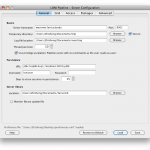
Now it’s nice to be able to hide all that complexity in a workflow, but sometimes you really need to get into it, so if you just double-click on a module group you’ll zoom into the module and see its contents. If you notice the clickable ‘Module Groupings’ bread crumb bar at the top of the workflow, it will let you traverse through the levels in the workflow that you’re viewing.

Previous: 5. Execution Table of Contents Next: 7. Advanced Topics
  1. Validation
  2. Executing a workflow
  3. Client disconnect/reconnect
  4. Server status
  5. Pausing a workflow
  6. Stopping a workflow
  7. Restart a module
  8. Module statuses
  9. Viewing output
  10. Debugging execution
  11. Report a bug

5.1 Validation

When you execute a workflow, the first thing the Pipeline does is validate it and check for errors. When the Pipeline does validation checks, modules show “Validating” status. You can also do that without actually executing the workflow. To start the stand alone validation go to Execution->Validate, and validation will automatically begin. If a connection is needed to a server the Pipeline will prompt you for a username and password. If any errors are found a dialog will pop up listing all the errors found in the workflow.

undefined

If your workflow is very large, you may want to run validation periodically on it as you’re building to check for errors early on.

5.2 Executing a workflow

Once you’ve completed editing your workflow, you can execute the workflow by simply clicking on the ‘Play’ button at the bottom of the workflow area. If the program needs a connection to a server, it will prompt you for a username and password. If you’ve already stored a username in your list of connections and already entered password on previous runs, then it will automatically connect for you.

Once all necessary connections have been made and validation has completed the workflow will begin to execute.

New statuses

Depending on the result of the execution, and how busy the Pipeline server is, you may see several statuses for these modules:

  • Initializing – Appears when instance is preparing for submission
  • Queued – Appears when instance already submitted the job and it is on the queue
  • Running – Appears when job starts execution
  • Complete – Appears when this module finishes executing successfully
  • Error – Appears when this module has error(s). Since version 4.2, Pipeline will continue to run whole workflow execution for succeeded instances after marking failed instances.
  • Backlogged – Appears when maximum job count has been reached for current server and the server temporary blocked the instance until new slots available
  • Staging – Appears when transferring files to/from server from/to localhost
  • Incomplete – Appears when module has finished its execution and some instances failed
  • Cancelled – Appears when parents of current module failed and continuation of current module became pointless
  • Paused – Appears when user pauses a running workflow. All running modules and their successor will be paused.

These statuses give more detailed information about the modules. The status of a particular module is shown next to the module on the workflow area. Hover the mouse on the module, a popup detailed box will appear. More detailed status information about each job for that module are also shown in the execution logs, which can be opened by right clicking a module and clicking on “View Execution Info…”. This window will be discussed further in the “Viewing Outputs” section.


Depending on the module and workflow, Pipeline predicts runtime of individual jobs on the grid based on similar jobs ran in the past. It then calculates runtime of the module as well as runtime of the whole workflow based on number of instances in the workflow, currently available grid resources, and other factors. The module and instance estimate will be shown where available when mouseover (hover) on the module, and the workflow estimate will be shown when mouseover on the lower left corner where workflow runtime is displayed.

5.3 Client disconnect/reconnect

Active Sessions

Once your workflow is running on the Pipeline server, it will continue to run even though you quit Pipeline or shut down your computer. This is helpful in the case that you want to start a workflow and then check the progress on a different computer (i.e. if you start the workflow at work and want to check on the results from home). After you have pressed play on the workflow and it is executing, quit out of the Pipeline. Make sure that you do NOT press stop, otherwise the workflow will stop running. Your workflow continues to execute even though the window is no longer open. To see the executing workflow again, start up the Pipeline client and use the Connection Manager to connect to the server on which you are running the workflow. Then go to Window -> Active Sessions on the top menu, a dialog with a list of all your active workflows will pop up. You can see the file name of your workflow, start time, finish time (if it’s still running, it will show “Running”). You can select any workflow in the list and click Reconnect. Your workflow will be open on the canvas with its latest status.

Note that workflows older than 15 days will be automatically removed from Active Sessions list. You can remove it manually as well, you can either press the Reset button when it’s open on the main window, or click “Remove” on the Active Sessions dialog.

5.4 Server status

Server statuses

When you start your workflow, it is being submitted to the Pipeline server and queued up. Pipeline gives information about the status of the server(s) connected. Information about how busy the server is, how many total slots are available and how many jobs are currently being backlogged, queued, and executed on the server. All this information appears at the bottom right corner of Pipeline window when you connect to the server. For those who set up their own Pipeline servers, please refer to the Server Guide: Configuration section for more information on how to enable this feature on your server.

5.5 Module statuses

While a workflow is executing, you can press the Stop button if desired. If you press the Stop button, then execution of the workflow is permanently stopped. There is no way to resume execution of the workflow at the point when you pressed Stop. When a workflow is stopped, modules show an “Incomplete” status.

5.6 Pausing a workflow

Pausing workflow
While a workflow is executing, you can press the Pause button to temporarily pause the workflow. All running jobs/instances will be stopped and all their output files will be deleted. Output from completed jobs will be kept. You can resume execution of the workflow later by pressing the Play button.

5.7 Stopping a workflow

While a workflow is executing, you can press the Stop button if desired. If you press the Stop button, execution of the workflow is permanently stopped. There is no way to resume execution of the workflow at the point when you pressed Stop. When a workflow is stopped, modules show an “Incomplete” status.

5.8 Restart a module

Restart module
You can restart a completed or errored module in a workflow. To do so, you can either right-click on a completed module and select “Restart Module”, or open Execution Logs on the module, under Info tab click “Restart Module”. All instances/jobs for this module and its successor modules will be resubmitted to run. Their output files will be deleted as well, to avoid possible conflict on subsequent run.

5.9 Viewing output

New statuses

As the modules continue executing you can view the output and error streams of any completed module. You can bring up the log viewer by going to Window->Log Viewer or more easily, right-clicking on the module that you want to view information about and click on ‘Execution Logs.’ This will bring up the log viewer and set its focus on the module that was clicked.

Once the log viewer is open, in the left hand column you can select the instance of the module that you want to view output for.

In addition to showing detailed status information, the execution info window also displays a variety of additional relevant job information such as the server it resides on, its running time, job and session ID’s, and command string. The session ID is a unique identifier given to all active workflows and can be used, along with your workflow’s name, to easily find and reconnect to a specific workflow from your active sessions in the future.

Output Files Tab

If you are having issues with a particular workflow that does not appear to be related to a Pipeline bug, you can email us (the Pipeline development team) all the information at the top of the execution information window so we can assist you.

The output and error log tabs each contain the data captured from the application’s output and error streams, respectively. These logs can be extremely helpful in debugging failed jobs. Many tools display enough information to the output and/or error stream to determine the reason that the job failed, whether it be incorrect input files, incorrect arguments, memory problems, etc.

The image on the left shows a typical example of the type of information that tools will display in the output stream.

Output Files Tab

The output files tab contains a list of all the files created by that instance of the module, and allows you to view them or download them to your local system. If the file is viewable, you can view them by selecting the file and clicking ‘View data’. The built-in Pipeline viewer can view a wide variety of MRI image formats and derived shape formats. You can download any files by selecting the files you want and clicking ‘Get Files.’ If you want to get all the output files of all the instances of a module, select all the instances you want in the left-hand column, then select all the output files in the right-hand tab and click ‘Download’.

If provenance is enabled for a workflow,  you will also see provenance files among the output files. By clicking the “Edit Provenance” button in Output Files tab, Pipeline will download and show in Provenance Editor the selected Provenance file.

5.10 Debugging execution

Inevitably, some of the instances (or all of them) of a module will fail sometimes and the module will have a red ring around it denoting the failure. In this case, using the log viewer as mentioned in the previous section will show all the failed instances of the module highlighted in red. With the information from the output and error stream you can diagnose nearly all the problems you may encounter while executing a workflow.

5.11 Report a bug

If you find a bug in the Pipeline, you can file a bug report through the Pipeline client. Select Help -> Report a Bug from the top menu bar. If desired, fill out the optional fields for name, email and Pipeline server username. You can also attach the workflow being processed and enter in any details about the bug. Please be as specific as possible in your bug description. Submitting the form will send the Pipeline team an email with all of the information, allowing us to debug your problem.

Report A Bug

Previous: 4. Building a Workflow Table of Contents Next: 6. Creating Modules
  1. Dragging in modules
  2. Connecting modules
    1. Smartline
  3. Setting parameter values
  4. Data sources and data sinks
  5. Cloud sources and cloud sinks
  6. Adding Metdata
    1. Input data tab
    2. Grouping tab
    3. Matrix tab
  7. Conditionals
    1. File conditions example
    2. Arithmetical/Comparison example
    3. Metadata conditions example
  8. Web service modules
  9. Transformer module
  10. Remote file browser
  11. Processing multiple inputs
  12. Enable/Disable parameters
  13. Annotations
  14. Variables
  15. IDA
  16. NDAR
  17. XNAT
  18. Cloud storage
  19. Server changer

For this example, we’re going to build a workflow from modules provided to us by the LONI Pipeline server. You don’t need to use the LONI server to create workflows though, and you can make your own modules as described later in this guide. First, open a new workflow by going to File->New.

4.1 Dragging in modules

Go to the server library at the left and expand the ‘AIR’ package. Click on the ‘Align Linear’ module and drag it into the workflow canvas that you just opened. Next drag in the ‘Reslice AIR’ module under the same package. Your screen should something like this.

undefined

Please note that in the current release of the LONI Pipeline, all modules that are used in a workflow must be either from the same server (remote or locally), or a pair of a remote server and your local machine (i.e. localhost). For example, you can mix modules from the LONI Pipeline server and your local machine, but you cannot mix modules from the LONI Pipeline server and modules from the Acme Pipeline server.

4.2 Connecting modules

Each module in a workflow can have some inputs and outputs. The inputs are on the top, and the outputs on the bottom. Go ahead and connect the output of the ‘Align Linear’ to the input of ‘Reslice AIR.’

When you attempt to make a connection, the Pipeline does some initial checking to make sure the connection is valid. For example, it won’t let you connect a file type parameter to a number type parameter, or connecting an output to another output and more.

Side note: the Pipeline supports the connection of a single output parameter to multiple input parameters, as well as the connection of multiple output parameters to a single input parameter. In the first case, the value of the output parameter is simply fed into all of the subsequent input parameters. In the latter case, the multiple outputs are all executed as a part of one command using the input parameter module’s executable.

One_Output_Multiple_Inputs Multiple_Outputs_One_Input

4.2.1 Smartline

Smartline is an automatic file conversion tool. Based on information about input and output, a Smartline can be drawn which takes care of any file translation needed. It is enabled by default, and you can disable it in your Preferences.

Smartline

When Smartline is enabled and you try to make a connection between different image formats, for example Analyze Image (.img), NIFTI (nii) or MINC (mnc), you will see “Smartline” is prompted at the end node. After you release the mouse click, a Smartline will be drawn. You will notice it is different in appearance from the regular line, as it has an extra converter module to do format translation. You can always replace an existing Smartline with a regular connection by right click Smartline and “Disable Smartline”. It will delete the Smartline and draw a regular connection if the file format of input and output matches. In addition, you can hold the “Shift” key when you draw lines, which overrides your saved Smartline mode temporarily, i.e. if you disabled Smartline in preference, it will try to draw a Smartline, if you have Smartline enabled in preference, it will try to draw a regular line.

4.3 Setting parameter values

Now we need to set the values of each of the input parameters on the ‘Align Linear’ module. Double-click on the left most parameter and select an image atlas. This is a neuroimaging specific file type so you may not have one. You can double-click on each parameter afterwards and enter a value for each one.

Once you’ve set the inputs of ‘Align Linear’ you’ll want to specify a destination for the output of the ‘Reslice AIR.’ Double-click on its output parameter and specify the path and a filename you want the file to be written to.

undefined

Note that you can mix data that is located on your computer and the computer that the server resides on, and the Pipeline will take care of moving data back and forth for you. For example, the input to the ‘Align Linear’ could be located on your local drive, but you could set the output of the ‘Reslice AIR’ to be written to some location on the Pipeline server or vice versa.

4.4 Data sources and data sinks

undefined

Sometimes you will want to use a single piece of data as an input to multiple modules in a workflow, or you just want to make the workflow easier to understand. In these cases you can take advantage of sources and sinks. Just right-click on any blank space in the workflow canvas and select New > Data source… In the dialog that opens enter some information about the data source, and then click on the ‘Inputs’ tab. From here, you can click on ‘Browse’ under the text area and browse and select multiple files into the list, or you can just type in the path to a file manually. You can click ‘Find and Replace’ button to do search and replace on your input data. Note that at the top there is an option for a server in case you want the data source to represent data on another computer.

Using this same method, you can right-click on the canvas and select New > Data sink… for use in your workflow. If no data sink is specified, output files will be in the temporary directory, with system generated filenames. You can specify the output filenames and location in a data sink and connect to the output of the module, the file will be generated specifically on that destination. Starting from version 5.1, files in data sinks are not copied over from temporary directories, but rather generated directly at the module’s execution time.

undefined undefined

Sometimes you want to just specify a target directory without specifying each file individually. Data source and data sink let you do this. For Data Source, select Directory Source and specify desired directory. Optionally, you can put filters so that only filenames inside the directory that meet the filter will be included. You can also specify file types, which filter based on file extensions. You can also check Recursive checkbox, which lets you search through sub-directories recursively. After connecting this Data Source to input of other modules, files in this directory that meet the filter’s condition will be feed as input. For Data Sink, select Directory Dump and specify desired directory, then all output files connected to this Data Sink will be copied to this directory.

4.5 Cloud sources and cloud sinks

undefined undefined undefined undefined

Cloud sources and sinks are similar to regular data sources and sinks, except that data are stored in the cloud. LONI Pipeline will take care of the data transfer between the cloud vendor and the compute nodes. To use cloud sources and sinks, you need to link your cloud account instructed here. You only have to do this once; the authentication tokens are securely kept for your convenience. You can unlink/revoke Pipeline’s access to your cloud account anytime from either Pipeline’s Tools > Cloud Storage window, or from your cloud vendor account settings.

To use your data in cloud as input, simply right-click on any blank space in the workflow canvas and select New > Cloud source… In the new dialog, you can specify vendor (if you have linked multiple vendors), and you can specify input by clicking Browse & Add… A file chooser window will open up with files in your cloud. You can specify one or multiple files. You can specify Pipeline server location to stage these files. Please note for Dropbox, only files in /Apps/LONI Pipeline/ can be accessed by the LONI Pipeline.

To write Pipeline output to the cloud, simply right-click on the canvas and select New > Cloud sink… Specify vendor, paths and servers. Please note that Amazon S3 and Dropbox are supported vendors of cloud sinks.

4.6 Adding Metadata

The “add metadata” button is a feature inside regular data sources that extends its functionality, allowing you to incorporate imaging data and non-imaging meta-data together, enable queries groupings, and construct study-designs based on user-specified criteria. Both the imaging data and the metadata information are passed to subsequent modules throughout the pipeline workflow in data-metadata pairs generated by the Pipeline. You can inspect the metadata for any module’s output under the module output files panel. The metadata can be read and fed to any module (Data Extraction), and values produced by any module can be added back to the metadata (Metadata Augmentation). The metadata may be used for setting up various conditional criteria in Conditional modules. The metadata information may be represented as an XML file, as long as it’s schema is valid (well-formed) and consistent (uniform for every subject in the study), or as a tabular spreadsheet (CVS).

First create a regular data source, then double-click the data source and click “Add Metadata”. Two new tabs will appear next to the Input tab.

4.6.1 Input data tab

undefined undefined This is very similar to the data-input mechanism in data-sources but has several additional components. It has two new text areas, one on the left that is used to input the data files, and the one on the right, used to input the corresponding metadata files. These two fields are formatted in such a way that the files listed in both areas are paired with each other and are listed in the same order. For example, line #1 in the data field is linked to line #1 in the metadata field and corresponds to subject/input #1; line #2 in the data field is linked with line #2 in the metadata field and belongs to subject/input #2; and so on. By selecting a file in either of the two fields (data/metadata) automatically selects the corresponding file in the other filed for ease of viewing.

In addition to the default view (separated view), there is also an option to merge the 2 windows and create a single text area. In the merged view, the data file and the meta data file pairs are listed on each line separated by a semicolon. The merged view is very useful when both data and metadata files have to be edited at the same time like deleting several entries, copy and paste entries, find-and-replace, etc. Switching between the 2 views is very simple (view mode option on the study module “data” window is used to switch between views) and can be done at anytime.

There are also several other options on the Data tab,

• Find and Replace: used to find a specific value and replace it with user specified value in both the data and metadata sections.

• Add Data, Add Meta Data: used to input files that are locally or remotely located.

• Clear list: used to delete everything listed.

• Number of Input items: lists the number of inputs specified by the user. A mismatch error will appear if the number of data files is not the same as the number of meta data files.

• Data type: the type of data entered can be specified using this option. It can be a directory, file, number, string, or enumerated. There is no type selection for metadata since the design supports only XML file format.

There is an Import Data option next to the Server address option. This allows the user to create a study module by importing data from directories or by specifying the file paths that exist on any of the LONI servers or on the user local machine. The Pipeline automatically matches the data and metadata files and creates a study module. This option can be used only if the data and the meta data organization on the servers follow predefined rule or format such as,

undefined undefined undefined

• Filename matching rule takes a directory, finds all files under the directory and matches data and metadata that have the same core name. By selecting “Recursive” all subdirectories are recursively searched. In order to restrict the search to only certain type of data, type of file option can be used. Filters can also be used to restrict the search based on some criteria.

• Derived from metadata rule takes a list of metadata files, derives data path from an element of the metadata and matches the metadata with the derived data. In order to do this, a directory path that contains these metadata files and the element name that contains the data path has to be specified. As for the filename matching rule, recursive and the filter options can also be used.

• Derived from CSV rule takes a CSV file that contains list of subject data information in a special format. The first row in this file corresponds to the column names/heading. Any information that is required about the subject could be listed in each column but the paths to the data file for each subject must always be listed. Starting from the second row each of the subject information is listed, one subject per row. The Pipeline reads the CSV file and automatically creates one metadata file for each subject and derives the paths to the corresponding data files as well.

After the rule and the required information is chosen, clicking on the Show Items button under the Import Data checkbox will list the data and the corresponding metadata files that matched the specification in viewing text window, file type is selected based on the file extension.

4.6.2 Grouping tab

undefined

Once the input data and the metadata files are selected, various groups, populations cohorts and strata can be created based on some meta-data criteria. There are two areas under the Grouping tab (similar to the Data tab), the left section lists all the metadata files specified under Data tab, and the right section lists the groups once they are defined.

A group can be created by clicking on the “New Group” option and specifying a group name. The group name can be changed later by right clicking on the group name. Clicking on one of the Group names, a new field appears at the bottom of the window used for specifying the grouping criteria – what metadata condition specified group-membership.

The grouping criteria follow the format of WHERE clause of XQuery (URL-REFERENCE). It contains several simple boolean operators. The Pipeline queries each of the metadata files based on the user-specified criteria and returns a boolean result. If true, then the imaging data file associated with the metadata-data item will be added to the group. The operators are, ,: comma, >: greater than, >=: greater than equal to, <: lesser than, <=: lesser than equal to. Single quotes must be used for a string value and there is no need for quotes for specifying numbers.

undefined undefined undefined

Before setting up the criteria for a particular group, a specific element in the metadata has to be identified. Once this is done the element has to be defined using XPath. To specify the XPath, the XML file on the left side of the 2-pane window is selected by double clicking on it, which causes an XML tree viewer to pop up. By selecting any element in the XML file, a path appears at the bottom of the window and this is the XPath. Once this is determined, the element can be defined by clicking on Add as variable and specifying a simple name for the element. This new element can be used to set up any conditional-expression criteria for any group that is created. Multiple variables can be defines as long as their names are unique. To view the list of variables, in the Menu bar, select Window > Variables. To use a variable and set up a criterion, curly brackets are wrapped around the variable name (e.g. {varAge}>56).

Under the grouping criteria conditions similar to the following example can be used,

{CDRSCORE}>=1 and {GENDER}=’F’, where

• CDRSCORE and GENDER are variables defined,

• >=, < are boolean operators,

• and/or represent conjunctions and disjunctions.

Multiple conjunctions and disjunctions can be used. Using parentheses (), explicitly specifies operation precedence, anything inside parentheses is evaluated first.

Once the grouping criteria are defined, clicking on the Update button will save the criteria and will display the result. Members satisfying the criteria will be listed under this group and the total group size will also be visible in the right pane. At any time, clicking on the Reload button all groups will updated and will display the results of the conditional expressions. A group can be deleted by pressing the Delete Group button.

undefinedAnother way to define and create a group for certain elements in the metadata file is the following: to create 2 groups based on whether the subject is male or female, one can select the element gender/sex in the metadata file, add the XPath as variable and click on Generate Groups option. A new window appears where the name of the variable ({gender/sex}) is entered. Two groups, Male and Female are automatically generated after clicking OK. Another example where this feature is useful is when the dataset has multiple groups, patient type1, patient type2, control subjects and so on. By selecting the corresponding element in the metadata file that defines the subject group type, one can use the Generate Groups option to easily create as many groups as the number of distinct values for that element.

4.6.3 Matrix tab

undefined

The Matrix tab provides a customized table view of all the metadata or multiple metadata elements chosen from the study. Multiple metadata elements can be selected by specifying the XPath or the variable for the XPath (separated by commas). Each column in the table corresponds to a metadata element (same order as specified) and each row corresponds to the subjects (same order as specified in the Input data tab). XML tree viewer’s “Add as matrix column button” can also be used to add more metadata elements to the table. Clicking on the Generate Matrix button, a table containing these results will be generated. The table can be sorted by clicking on the header of any column and can be exported to a CSV file by clicking on the CSV file button.

You can also save metadata of the study module as a flat CSV file. Click Save metadata as CSV… button, choose filename, and click OK. One metadata will be saved as one row in the CSV file. The first row in the CSV file will be headers. The first three columns in the CSV file will be index, data value, and metadata path of the study module. Missing value will be treated as empty value (nothing between two commas).

4.7 Conditionals

Conditional module is used when the execution path of various inputs to a workflow is dependent on some criteria. Use of Conditional Modules makes the workflow more dynamic. Conditional module can be created by right clicking on the empty area in any workflow and choosing “Conditional” under the “New” option. A new dialog will appear that has three tabs. The first and second tab is similar to what is seen in other type of modules. The third tab is different and is called “Conditions”. Under this tab there is a “Condition source code” section where the conditional criteria should be entered. The syntax of the code entered is the same as the Pipeline Programming Language (PPL), which is similar to Java/C. Pipeline programming language is very simple and easy to learn.

undefined undefined undefined

Pipeline programming language supports following functions

Supported functions

Function name Parameter type Description
exists() File Tests whether the file or directory denoted by parameter’s path exists.
isdir() File Tests whether the file denoted by this parameter’s path is a directory
length() File Returns the length of the file denoted by this parameter’s path.
hasMetadata() All types Tests whether the parameter value has metadata
runXQuery(“”) All types Given a string of the ‘where’ clause of the XQuery language, returns boolean result of the query
belongsToGroup(“”) All types Given a string of group name defined in the Study module, tests whether the parameter belongs to the group
getElementValue(“”) All types Returns the value of an XML element identified by the given XPath
startsWith(“”) String Tests if this string starts with the specified prefix.
endsWith(“”) String Tests if this string ends with the specified suffix.
contains(“”) String Returns true if this string contains the specified String value.
length() String Returns the length of this string.
collectionSize() All types Returns the size of current parameter’s collection.
instanceIndex() All types Returns the index of current instance of parameter

Supported Operators

Type Operators
unary !
multiplicative *   /   %
additive +   –
relational <    >   <=   >=
equality ==    !=
logical AND &&   and (case insensitive)
logical OR ||   or (case insensitive)

Examples listed below will help better understand the functionality of the Conditional module.

4.7.1 File conditions example

This example will help understand how to set up a conditional module that chooses the execution path based on weather a file exists at a specific module output.

To create this conditional module follow the steps below,

1. Right click on the empty area in any workflow and select “New->Conditional”

2. Click on “Conditions” tab and click on “Edit” button.

3. Click on “Add” button to create a new parameter. Name the parameter, for example as “inputFile”. Choose the file type if needed and click “OK”.

4. Click on the “Condition source code” area and press the F1 Key to see a list of available parameters (NOTE: If there are no parameters declared, then there will be no parameters displayed when F1 key is pressed. New parameters have to be defined for the current conditional module before the conditional source code is specified). Choose the “inputFile” parameter by double clicking on this option.

5.Enter a “.” after the inputFile (inputFile.) to access the various functions. Choose”exists()”under “File functions” option by double clicking on it (inputFile.exists()). This condition checks if the parameter “inputFile” exists.

6. Click OK and a new conditional module is created with one input and two outputs, “TRUE” and “FALSE”. If the parameter “inputFile” exists then the conditional will feed the inputFile to the “TRUE” output Parameter else to the “FALSE” output parameter.

7. Other functional modules can be connected to the outputs of TRUE/FALSE accordingly. If one output is always used, the other output could be disabled like any other module output.

4.7.2 Arithmetical/Comparison example

This example will demonstrate how to check the value of a parameter and determine if it has positive value(this number could be output of a previous module or information in the meta data).

undefinedundefined undefined 1) Follow the previous example until the step where the parameters are defined. Click on edit and create 2 input parameters, number1, number2 and both are of type “Number”. Click “OK”.

2) In the “Condition source code” area type the following “Number1 > 0 && Number2 > 0”. This condition will check if both the inputs, Number1 and Number2 are greater than zero i.e. positive values. The conditional module created thus will have two inputs (Number1 and Number2) and four outputs (2 True and 2 False).

3) Arithmetic comparisons with other types of parameters (String, File, Numbers etc ) can also be performed using the Conditional Module. For example, a conditional module can have 5 input parameters like,

inputFile – Type: File

inputDir – Type: File

Number1 – Type: Number

Number2 – Type: Number

Name – Type: String

We can make various conditions like,

a) inputFile.exists && inputDir.isdir() :This condition checks if inputFile exists AND inputDir is a directory. This will return TRUE only if both the conditions are true since && logical operator is used.

b) inputFile.exists() || (Number1 + Number2 > 10 && Number1 * Number2 < 500): This condition checks if inputFile exists OR Number1 plus Number2 is greater than 10 AND Number1 times Number2 is lower than 500. This condition will return true if inputFiles exists OR if both arithmetical conditions are True.

4.7.3 Metadata conditions example

Another important and useful feature of Conditional Module is its ability to be used with a Study module. Metadata information from the input files can be used to create various conditions, for example “inputFile.belongsToGroup(“Young”)”, where Young is a group created under the Study Module. This condition will ensure that all the input files that belong to group Young will be fed to the TRUE output parameter. For more details on setting up groups in a study module using metadata information please refer to the Study module description.

undefined undefined undefined

4.8 Web service modules

The type of this module already implies its role in the workflow, it allows users to call web services and use its results for further processing. As of version 5.3 only SOAP (Simple Object Access Protocol) based web services are supported. Web services are described in a special XML file, WSDL files, which have different versions and 5.3 only support WSDL 1.1.

In order to create a web service module, please follow these instructions:

1) Right click on the canvas and select New->Web Service…
ws1

2) In a newly opened dialog, enter a valid WSDL location URL and click Connect.
ws2

3) Pipeline will try to connect to WSDL document and show all interfaces and methods of selected web service.
ws3
ws4

4) After selecting the interface and method, click on “Create module” button. A new web service module will appear on the canvas with all the inputs that selected method requires. Below are two examples of different methods from the same WSDL document.

The following image shows a web service module which doesn’t have any input parameter,
ws5
but the following image has 3 required input parameters and pipeline automatically defined them. Pipeline will try to detect parameter types and set them. Names of input parameters are set automatically and are not subject to change.
ws6

Let’s right click on the module and see what’s inside. The web service module has similar metadata values as other pipeline modules in their Info tabs. Parameters tab shows all input parameters as well as output paramaters. Inputs are the same as for other modules, but outputs are different. Before talking about Outputs, please note that you have couple limitations when playing with parameters of web service modules. Unlike other modules, these modules won’t allow you to change input parameter names or create new input parameters. You will only be able to create new outputs.

1) Click on Add button and a new parameter will be created, which by default is already an output parameter.The image below shows the described scenario which was done with “list_databases” method. Thus, it doesn’t have any input parameter and only has the newly created output parameter “New Parameter 1”.
ws7

2) If the newly created parameter is not selected, select it and “Select output branch…” tree will appear. This tree shows you the hierarchy of the output XML the web service provides. The Output of SOAP web service is expected to be an XML document. If you don’t select anything from the tree, then the whole result in XML format will become the return value of the selected output parameter. But if you don’t want to deal with XML documents and are only interested in getting text output from the web service, simply select the youngest child in the tree (node which doesn’t have children).

ws8
In this example, we need to take just definitions of web service’s output, so when we connect other modules to this string output parameter, we won’t have to worry about parsing XML. Of course, we could select any of the parent of “definition” node ( for example, we could select Definition, or ArrayOfDefinition, or even Root ) but in that case the return value would be in XML and the next module would need to parse it.

3) Click OK and you’ll notice the output parameter which we just created.
ws9

Now we can test our web service, simply click the Play button ( or Ctrl+R on Windows, Cmd+R on Mac ) and the web service module should complete in couple seconds. After completion, right click on the module and select “Show Results”.
ws10

A similar to Execution logs dialog will open which will provide basic information of the web service and its output.
Switch to “Output Stream” tab, there you can see the output of web service module execution.
ws11

It is a SOAP Envelope and includes namespace information for parsing the result. You may now wonder and ask such question “But didn’t we choose to have just the “definition” tag as output ?”, well please note, that when we chose that, we were configuring a single output parameter of this module and this is the output stream of the web service module which contains the whole output. It will always stay the same, no matter if the module has any output parameter or multiple of them.

In order to use the return value of configured parameter, simply connect the output to other modules.
ws12
As you can see, we got 53 results and the next module, started to execute all of them.

Finally, if you created a web service module and in the future you want to change the method or interface, you can do it by switching into tab “Service Details” in Edit Web Service dialog.

ws13

There you can check and select all interfaces and methods of the web service as well as get information about method parameters. Please note that as soon as you change the interface or method, all previously created output parameters will be removed.

4.9 Transformer Module

Transformer modules are a new type of module introduced in Pipeline version 6.1. These modules expand on the functionality of the current transformations feature that exists in the module definition window of regular modules. Allowing users to do transformations in an independent module opens up many avenues for manipulating parameters in new ways as well as simplifying workflows. Transformers follow much the same format as regular modules. You can create input parameters to hold dynamic values, such as file names, and then create transformation steps to transform the values in different ways. The steps happen sequentially and their result is stored in a single output parameter that is automatically created by the module.
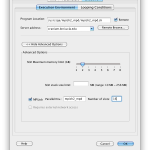
1. To get started using transformers, right click the empty canvas and click the new “transformer” module type.
new_transformer

2. After creating the transformer, the module definition window opens where the users can specify any number of input parameters and then configure various transformations. As a simple example, let’s click the “Parameters” tab and add a new input parameter with the type “File”.
add_parameter

3. Click the “Transformations” tab so we can start transforming. The transformer module does not automatically include your input parameters in the resulting output unless it is told to do so. Thus, to begin transforming the input we must append it to the output of the transformer module which always begins empty. To do this, click “add”, select “append”, then change the dropdown menu from “Custom Value” to “Parameter Value”, and finally select the input parameter we created in the previous step.

4. Now we can transform this input in any way we like. To continue our example, let’s say that we know the file(s) given to this input parameter will contain the word “input” and we want to change that to “subject”. We can “add” another step, select “replace”, and then type “input” in the first box and “subject” in the second box so that the the former will be replaced with the latter. We can also select a type for our output parameter, which will be automatically created when we finish making the module. In this example, our input is a file and we want to keep the output as a file so change the dropdown menu next to “Output Type:” to file. Our transformer window should now look like this:

transformer_example

5. Click “OK” at the bottom of the window to finalize our module. It will look like a smaller version of a regular module:
transformer_module
6. To complete the example, we can add a data source of input files to connect to the transformer module’s input parameter, as well as an executable module to connect to the transformer’s output parameter. It is important to note that transformer module’s cannot execute on their own and must be connected to an executable module. After executing, the evaluation logs of the transformer module can be checked by right clicking the transformer and it displays each step and the corresponding result.
transformer_module1logs

The example above was very simple, but you can create a variety of complex transformations using the 4 available transformation types:


Currently, transformer modules are not meant to replace the old transformation feature and there is some overlap in the functionality of these 2 features. The old transformations feature excels at manipulating output parameters and setting up definitions for optional parameters.

4.10 Remote file browser

Remote browsing Remote File Browser

Now with Remote File Browser you will be able to browse remotely the files located on the server and select them as executable locations, parameter values, and data sources and sinks. This feature appears when you check the “Remote” checkbox and click on the “Remote browse…” button or for some cases like data sources simply by clicking Add button and selecting Remote file.

4.11 Processing multiple inputs

One of the strengths of the LONI Pipeline is its ability to simplify processing of multiple pieces of data, by using the same workflow you use to process a single input. The only change you need to create a data source to hold the multiple inputs. The data source can then be used as the input to any module in the workflow.

You can even provide multiple inputs to multiple parameters. For example, if you have a parameter on a module with a data source feeding in 4 inputs and another parameter also with a data source feeding in 4 inputs the Pipeline will submit 4 instances of that module for execution with each pair of inputs being submitted together. If you were to bind 4 inputs to a data source, and 5 inputs to another, the Pipeline would submit 20 instances of this module for execution. The commands will be composed of the dot product of all the inputs provided. For the latter case, the order of iteration depends on the order of the parameters. In other words, if the 4 inputs (say: A, B, C, and D) are provided to the module’s first parameter and the 5 inputs (say: 1, 2, 3, 4, and 5) to its second parameter, the Pipeline would generate command arguments in the following order:

A 1, A 2, A 3, A 4, A 5, B 1, B 2, B 3, B 4, B 5, C 1, …
In fact, this principle generalizes to any number of parameters. The last parameter is always iterated first, then the second-to-last, and so on.

Alternately, you can use a .list file (a file ending with a .list extension which contains the path to all input files) to specify multiple input files.

Note that the cardinality of modules will be matched up whenever possible in the workflow, and whenever there is a mismatch, the inputs will be multiplied. Here is an example to illustrate.

undefined In this workflow the Pipeline will execute 4 instances of every module.
undefined In this workflow modules A and C will have 4 instances. Module D will have 5 instances and module B will have 20 instances.

Also, it is worth mentioning that it is valid to connect two output parameters to the same input parameter. Let’s look at the example below:

undefined

Let’s say that module A creates an output file called A_OUTPUT and module B creates an output called B_OUTPUT. Module C describes the GNU copy command, and has two input parameters – Source and Target, both taking one argument. The output parameters of module A and B are connected to module C’s Source input parameter. Finally, let module C’s Target parameter be bound to some target path, “/nethome/users/someuser/”.

The resulting execution is as follows – module A and B will run and create their respective output files, and module C will then execute two commands:

cp A_OUTPUT /nethome/users/someuser/
cp B_OUTPUT /nethome/users/someuser/

If the location you’re running this workflow at has a cluster, the pipeline will run both commands concurrently; if a cluster is not available, both commands will run in series and wait for completion before moving on to any subsequent modules.

4.12 Enable/Disable parameters

3 State buttons Exported parameter

Most modules have 2-3 required parameters on them, and several more optional parameters. If you want to exercise any of those additional options, simply double-click on the module and you’ll see a list of all the required and optional parameters for that module. For each additional option you want to use just click on the box on the left side of its name to enable, disable and export it. When the checkbox is not checked, parameter is disabled and Pipeline will not require to input value for that parameter. If checkbox is checked, parameter is Enabled and Pipeline will require to input value for that parameter. Finally when checkbox is checked and has double line, it means that current parameter is exported. Notice that you are not able to disable parameters that are required.

4.13 Annotations

undefinedAs your workflow becomes larger and larger at times you may forget what a particular section of it was meant to perform. To help jog your memory, you can add annotations to your workflow to remind you what you were doing later on, or as notes for other people who use your workflow. The Pipeline currently supports textual and graphic annotations. To add an annotation, right-click on an empty area of the canvas and select either ‘Add Annotation’ or ‘Add Image.’ A dialog will pop up and, based on type of annotation you are creating, you will be able to enter text or select an image. Click OK when finished and you should see a translucent box appear in your workflow where you clicked. You can move the annotation around by just clicking and dragging. You can also copy and paste annotations just like other modules. Lengthy text annotations can be collapsed to reduce clutter in a workflow, then expanded to retrieve full descriptions. A ‘Hide Annotations’ option in the workflow toolbar can be utilized to completely hide all annotations from the canvas.

4.14 Variables

undefinedTo make things easier when entering values for module parameters, you can define variables to represent a path name that can then be used as the input or output to a module parameter. You can access the variables window by going to Window -> Variables. Click on the Add button, then type in the Name (whatever you want to call the variable) and the Value (the path associated with the variable). The Scope column shows the module group name where this variable is created. Variables are inherited from parent module group to child module group, but variables defined inside child module group cannot be seen by its parent. If you want to continue adding more variables, click on the Add button again; otherwise, simply close the Variables dialog box. Now, in order to use a variable in your workflow, you use the convention {variableName} as the value for your input and output parameters (i.e. surround the variable name with curly braces). The Pipeline will parse the actual path location of the variable for you when it executes.

Pipeline supports two special variables – {$username} and {$tempdir}. {$username} is predefined for all workflows and its value is the username of the user that runs the workflow. {$tempdir} requires configuration by the Pipeline server administrator either via the Pipeline server installation utility or the server terminal GUI. Once configured, its value will be the path to a globally-accessible scratch directory. You can use both in the same way that you use other variables.

4.15 IDA

undefinedThe Pipeline has the capability to utilize data from the LONI Image Data Archive (IDA). Pipeline takes advantage of our cluster nodes to download files in parallel from the IDA database. This improves download time drastically, and you don’t have to keep connected to the server during the download. You can also enable metadata so that metadata files will be downloaded along with data as a Study design module.

In order to establish a connection to the database, go to Tools > Database. Under IDA tab, enter The Pipeline has the capability to utilize data from the LONI Image Data Archive (IDA). Give your IDA username and password and click Connect. You will see on the right hand side the data that you have access to (you will have to either upload your own data through the IDA web interface at https://ida.loni.usc.edu/login.jsp, or log into IDA and put existing files into your account).

Select the files that you want to process with the Pipeline, desired file format and where do you want to put the data. You can put data remotely on the server, or locally on your machine. If destination is remote, check the Remote box and specify server name. If you want to include metadata, check Include metadata check box, and select metadata file destination server. Click on Create Module, after a while a new workflow will be created with an IDAGet module and a data source (if include metadata was not selected) or a study (if include metadata was checked).

undefinedundefinedundefined undefined At this point data files are not downloaded. (Metadata files are downloaded, if you have it enabled.) You will notice the output of the IDAGet module has the file type you specified. You can now connect this output to the input of your workflow and run the workflow. As the first module of the workflow, data will be downloaded from IDA and fed directly to the next module. Notice the data and metadata downloaded from the IDA will be temporary stored as intermediate files of the workflow, they will be deleted if you reset the workflow.

undefinedundefined If you like to use data from IDA over and over again, it is better to download the data the first time to some permanent location and reuse it later. You can do so by creating a data sink and connect it to the output of the IDAGet module. You can either list output items one by one, or use directory dump. After successfully running this workflow, you can copy this data sink and paste it to any workflow, right click on it and choose “Convert to study”. The data sink will be automatically converted to a study module with proper inputs. Later if you want to reuse this data set, you can simply copy this study module to your workflow.

4.16 NDAR

undefined undefined undefined The Pipeline supports integration from the National Database for Autism Research (NDAR) database. First of all, you need to link your NDAR credential in LONI Pipeline. Login with your NDAR credential under Tools > Database & Cloud Storage. Once it’s connected, give package ID(s) (see below for more info) you would like to download, then select file type and the Pipeline server address. When you click Create Modules, a workflow will be created with specified package ID and file type. You can connect your processing workflow to the output parameter and run the workflow.

Please note, the majority of NDAR packages are very large in size (over 1GB is common), so downloading a package may take a long time. Once the download is complete, it will list all data files (dicom, nifti, minc, analyze img) in the package as inputs.

undefined undefined Package ID: When you create a new package, you can find out the package ID after you specify the package name on NDAR website. To find out package IDs of existing packages, open Download Manager to find out the IDs.

4.17 XNAT

undefinedThe Pipeline supports integration from the XNAT database. By providing the XNAT Catalog file (which is an XML file identifying your data, it can be downloaded from XNAT web interface), Pipeline takes advantage of server’s cluster nodes to download files in parallel from the XNAT server, and to do file conversion if necessary. The mechanism is similar to the IDA downloading, which provides tight integration on your processing steps, improves download time drastically, and you don’t have to keep connected during the download. You can also enable metadata so that metadata files will be downloaded along with data as a Study design module.

Pipeline-XNAT interface requires XNAT Catalog XML file from an XNAT server. Catalog file is an XML file that contains a list of sessions/entries, each entry is represented as a unique URI on the XNAT server. Catalog files can be easily obtained on XNAT’s web interface. For more information, please check our detailed step-by-step protocol for anonymizing, uploading, downloading and utilizing data from XNAT database.

Picture1

Anonymize Subject data

Open Pipeline Client and type anonymize at the search window. Choose the module. Connect a data source with all the dicom directories that needs to be anonymized and save it the required location. Run the workflow to anonymize the dicom files. One could also change the .das file that is used here as the default and based on the user requirement a new new .das file can be generated.

Uploading files to XNAT central

Go to XNAT server and login if you have a username if not click on register to create one.

Picture2

Picture3

Picture4

Picture5
Once you login, click on New and choose Project.

Enter the information on the project form and also choose the accessibility option and submit.

Also you could create new subjects under the project, by clicking on new Subject and filling out the information that is required.

To upload images, click on Upload and choose Images,

Picture6

Picture7

Picture8

Picture9

Picture10

Choose Option1: Choose the project to which you want to upload the data. Select the .zip file and upload the images.

Once the uploading is done, follow the instructions to review and archive the uploaded data.

Now go to Pre archived images and submit the sessions so it is achived in the specific project. For eg, Under Upload option choose “ Go to pre-archive” section.

Here on this page you will see a list of all the images that are uploaded.

Click on each session and select the Project, Subject and session option and click on submit to archive the sessions.

Once the subject/sessions are submitted, you can view them under the main Project page.

Downloading archived files using Pipeline

Picture12
Picture13

Picture14

Picture15

Picture16

Picture17

Picture18

Picture19

Choose the Project that you are interested in. Go to MR sessions. Click on Options and select Download.

This will open another window as shown below. Choose sessions and data type, and select Option 2 (XML) as download format.

Click on submit and an XML file opens.

Right click on this file and save it to you local computer.
Open the Pipeline client (PL 5.1). Go to Tools and select Database (IDA/XNAT).

Under XNAT tab, browse and select the xml file that was downloaded from the XNAT central website. Fill in the username and password information and connect.

Also one could download the data in different formats. Choose one. The data can also be saved on a remote server or on the local machine.

Click on Create Module and connect a LONI viewer to view the data that is being downloaded, or module with appropriate input to process the data, or a data sink with specified download file location path to save the data.

Run the workflow, XNATGet module will download the data.

4.18 Cloud storage

undefined undefined undefined undefined undefined

You can specify your data in the cloud as input and output to any Pipeline workflows. Currently supported cloud storage vendors are Amazon S3, Box and Dropbox. To start, link your cloud account to the LONI Pipeline under Tools > Database & Cloud Storage > Cloud Storage tab.
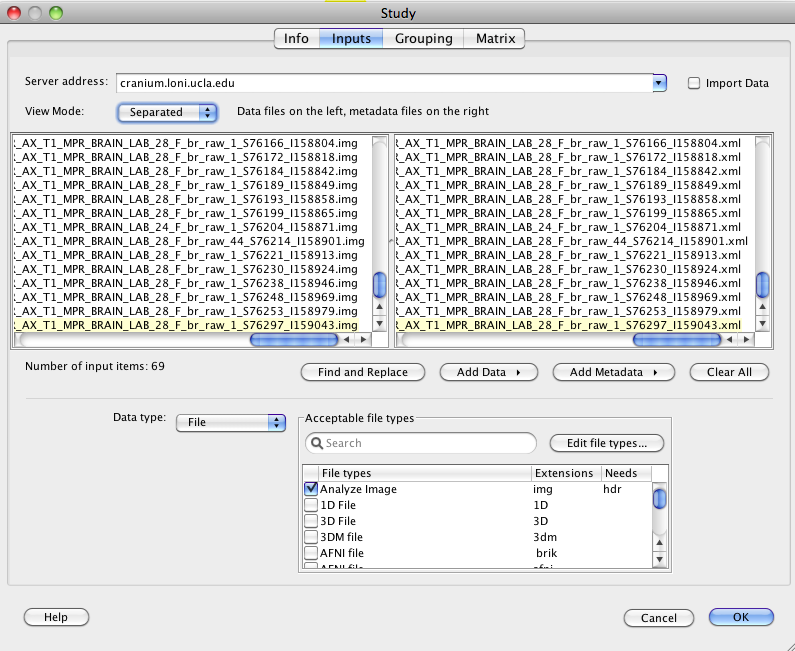
To link your Amazon S3 account, you need to specify Access Key ID and Access Key, which can be found here (after login, it’s under Access Credentials). Copy and paste the Access Key ID and Access Key and click “Link Amazon S3”, the status under Amazon S3 should show “Linked”.

To link your Box account, click on “Link Box…” button and click on “Open Link Page” button. Your browser will open a web page and you need to login with your Box account. After successfully authenticate, you can close the web page and go back to LONI Pipeline and click “Done” button. Now the status under Box should show “Linked”.

To link your Dropbox account, click on “Link Dropbox…” button and click on “Open Link Page” button. Your browser will open a web page and you need to login with your Dropbox account. After successfully authenticate, and click “Allow” button, you can close the web page and go back to LONI Pipeline and click “Done” button. Now the status under Dropbox should show “Linked”.

You can now use your data in the cloud as input and have results saved to the cloud by using the Cloud Source and Cloud Sink modules.
4.19 Server changer

Server ChangerSuppose you have more than one Pipeline servers running, each of them is configured so that all executables have the same path. In this situation, you want to change the server address on some or all the modules in a workflow quickly, the server changer tool lets you do this. Select Tools -> Server Changer, specify particular regular modules, data modules, or all of them, and choose the new server and click “Change”. Note the new server must be already stored in Connection Manager.
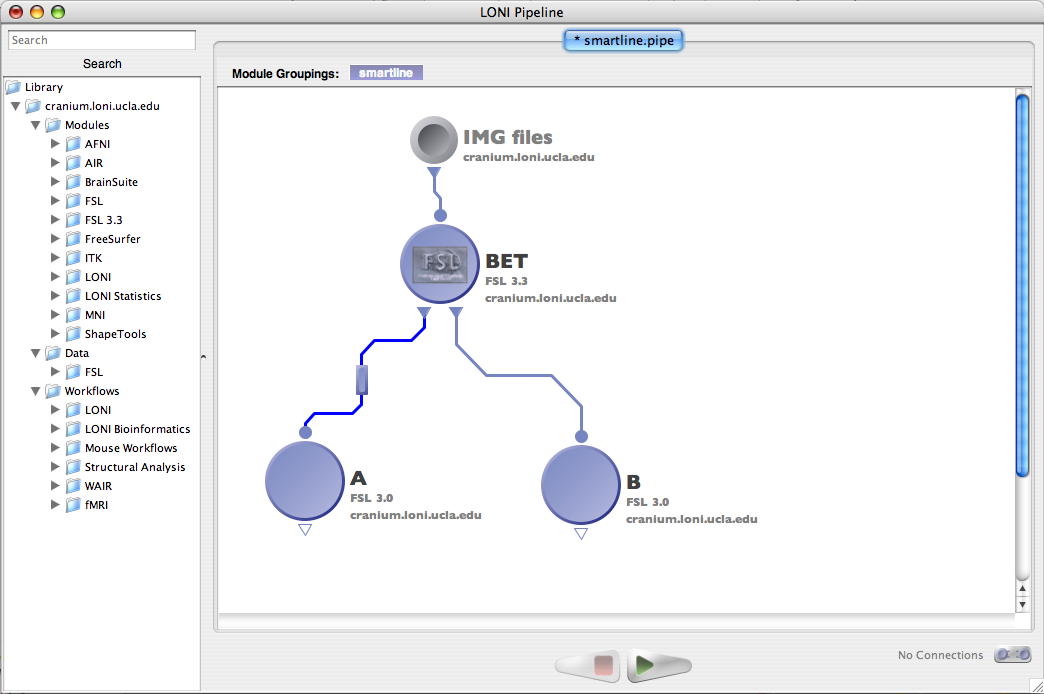
Previous: 3. Interface Overview Table of Contents Next: 5. Execution